A Supplement to the Journey to the West
Nota de la comunidad
10 valoraciones
1641 · Dong Shuo
Promedios por categoría
Tu valoración
Inicia sesión para valorarSinopsis
Aún no disponible en español — se muestra la versión en inglés.
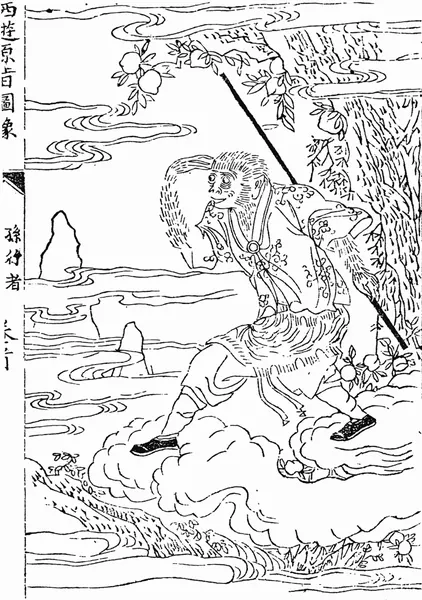
A Supplement to the Journey to the West is a Chinese shenmo (fantastic) novel written around 1640 AD by Dong Yue. It acts as an addendum to the famous 16th century novel Journey to the West and takes place between chapters 61 and 62. In the story, the Monkey King is trapped in a dream world by the Qing Fish demon, an embodiment of desire, who wishes to eat his master, the Tang Sanzang. He wanders from one adventure to the next, using a magic tower of mirrors and a jade doorway to travel to different points in time. In the Qin dynasty, he disguises himself as Consort Yu (Xiang Yu's wife) in order to locate a magic weapon needed for his quest to India. During the Song dynasty, he serves in place of King Yama as the judge of Hell. After returning to the Tang dynasty, he finds that Tang Sanzang has taken a wife and become a general charged with wiping out desire. In the end, Monkey unwillingly participates in a great war between all the kingdoms of the world, during which time he faces one of his own sons on the battlefield. He eventually awakens in time to kill the demon, thus freeing himself of desire. At the end of the novel, the author lists twelve hypothetical questions that a reader might ask and answers them. For instance, he explains that the reason he wrote the Supplement is because he wanted Monkey to face an opponent—in this case desire—that he could not defeat with his great strength. He also explains why he waited to reveal the monster at the end of the novel, why Monkey serves as King Yama, and the peculiarities of time travel in the dream world. There is a debate between scholars over when the book was actually published. One school of thought favors a political interpretation which lends itself to a later publication after the founding of the Qing dynasty (1644–1911). The second favors a religious interpretation which lends itself to an earlier publication during the late Ming dynasty (1368–1644). Evidence in favor of the former includes references to the stench of nearby “Tartars,” a possible allusion to the Manchus who would eventually found the Qing dynasty of China. Evidence in favor of the latter includes references to Buddhist sutras and the suppression of desire and the lack of political statements “lament[ing] the fate of the country.” The novel can ultimately be linked to the Ming because a mid-17th century poem dates it to the year 1640. The novel draws heavily from Yuan and Ming dynasty tales, including the literary ancestor of the Romance of the Three Kingdoms.
Licencia del texto: CC BY-SA 4.0 · Fuente
Detalles
- Tipo
- Libro
- Estreno
- 1 de enero de 1641
- Géneros
- fantasy, adventure fiction
- Creado por
- Dong Shuo
- Países
- China
Portada: Wikimedia Commons · AnonymousUnknown author · Public domain · Fuente
