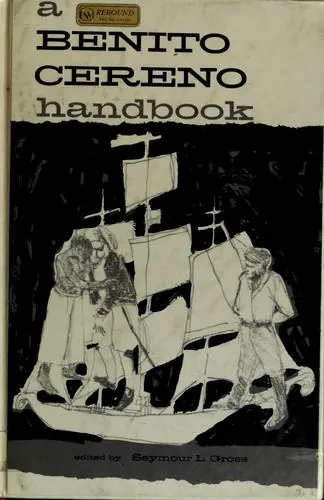
Benito Cereno
Nota da comunidade
24 avaliações
1855 · Herman Melville
Médias por categoria
Sua avaliação
Entre para avaliarEm outros sites
Notas de outros sites pertencem a eles; cada link abre a fonte.
Sinopse
Ainda não disponível em português — exibindo a versão em inglês.
Benito Cereno is a novella by Herman Melville, a fictionalized account about the revolt on a Spanish slave ship captained by Don Benito Cereno, first published in three installments in Putnam's Monthly in 1855. The tale, slightly revised, was included in his short story collection The Piazza Tales that appeared in May 1856. According to scholar Merton M. Sealts Jr., the story is "an oblique comment on those prevailing attitudes toward blacks and slavery in the United States that would ultimately precipitate civil war between North and South". Over time, Melville's story has been "increasingly recognized as among his greatest achievements". In 1799 off the coast of Chile, captain Amasa Delano of the American sealer and merchant ship Bachelor's Delight visits the San Dominick, a Spanish slave ship apparently in distress. After learning from its captain Benito Cereno that a storm has taken many crewmembers and provisions, Delano offers to assist. He notices that Cereno is awkwardly passive for a captain and the slaves display remarkably inappropriate behavior, and though this piques his suspicion he ultimately decides he is being paranoid. When he leaves the San Dominick and captain Cereno jumps after him, he finally discovers that the slaves have revolted and forced the surviving crew to maintain a false narrative. Employing a third-person narrator who reports Delano's point of view without any correction, the story has become a famous example of unreliable narration. Much critical study has gone into the story's relation to the Toussaint Louverture-led slave rebellion of the 1790s in Saint-Domingue, as well as to Melville's use of one chapter from the historical Amasa Delano's Voyages of 1817, a source of such importance that "he must have written 'Benito Cereno' with Chapter 18 constantly open before him." The novella's "unreliable, even deceptive, narration" continues to cause misunderstanding. Many reviewers of The Piazza Tales cited the novella as one of the highlights in the collection. Melville biographer Hershel Parker calls it "an intensely controlled work, formally one of the most nearly perfect things Melville ever did."
Licença do texto: CC BY-SA 4.0 · Fonte
Detalhes
- Tipo
- Livro
- Lançamento
- 1 de janeiro de 1855
- Criado por
- Herman Melville
- Países
- United States