Médias por categoria
Sua avaliação
Entre para avaliarEm outros sites
Notas de outros sites pertencem a eles; cada link abre a fonte.
Sinopse
Ainda não disponível em português — exibindo a versão em inglês.
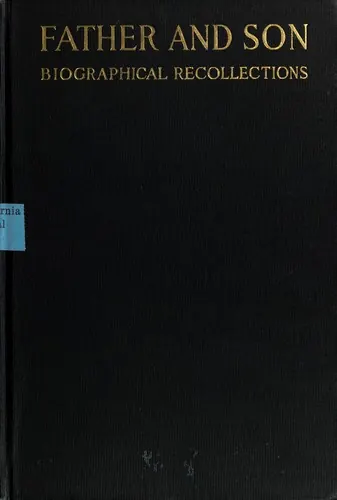
Father and Son, originally subtitled "A Study of Two Temperaments", is a 1907 memoir by the poet and critic Edmund Gosse, initially published anonymously. Gosse had already published a biography of his father in 1890. Father and Son describes Edmund Gosse's early years in an exceptionally devout Plymouth Brethren home. His mother, Emily Gosse, who died of breast cancer at the age of 50, was a writer of Christian tracts. His father, Philip Henry Gosse, was an influential and largely self-taught invertebrate zoologist and student of marine biology who, after his wife's death, took Edmund to live in Devon. The book focuses on the relationship between the stern religious father, who rejected the new evolutionary theories of his scientific colleague Charles Darwin, and the son's gradual rejection of Christian fundamentalism. Gosse used pseudonyms throughout the book, but many of the people depicted have since been identified. Michael Newton, a Lecturer in English at University College, London, has called the book "a brilliant, and often comic, record of the small diplomacies of home: those indirections, omissions, insincerities, and secrecies that underlie family relationships". "[B]rilliantly written, and full of gentle wit," the book is "an unmatched social document, preserving for us whole the experience of childhood in a Protestant sect in the Victorian period. ... Above all, it is one of our best accounts of adolescence, particularly for those who endured...a religious upbringing." The literary critic Vivian Gornick has described the book as an early example of the modern memoir of "becoming", in which "What happened to the writer is not what matters; what matters is the large sense that the writer is able to make of what happened." Although Edmund Gosse prefaces the book with the claim that the incidents described are sober reality, a modern biography of Philip Henry Gosse by Ann Thwaite presents him not as a repressive tyrant who cruelly scrutinized the state of his son's soul, but as a gentle and thoughtful person of "delicacy and inner warmth". The biographer and critic D. J. Taylor described Gosse's portrayal of his father as "horribly partial" and claimed that, in Thwaite's work, "the supposedly sequestered, melancholic pattern of [Edmund] Gosse's London and Devonshire childhood is repeatedly proved to have contained great affection, friends, fun and even light reading".
Licença do texto: CC BY-SA 4.0 · Fonte
Detalhes
- Tipo
- Livro
- Lançamento
- 1 de janeiro de 1907
- Gêneros
- autobiography
- Criado por
- Edmund Gosse
- Países
- United Kingdom