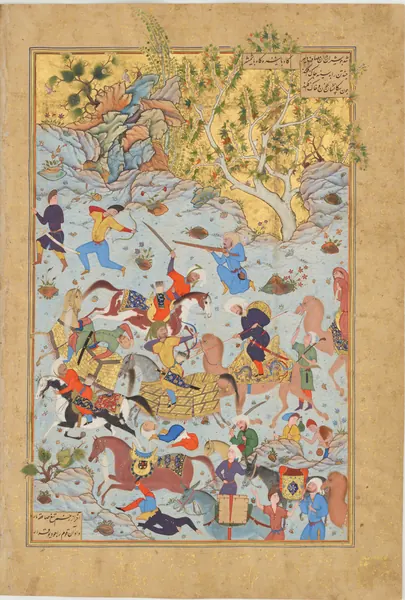
Haft Awrang
Nota de la comunidad
18 valoraciones
Jami
Promedios por categoría
Tu valoración
Inicia sesión para valorarSinopsis
Aún no disponible en español — se muestra la versión en inglés.
Haft Awrang (Persian: هفت اورنگ, meaning "Seven Thrones") by the Persian poet Jami is a classic of Persian literature composed some time between 1468 and 1485. Jami completed the work as seven books following a masnavi format: "Selselat adh-dhahab" (سلسلة الذهب, "Chain of Gold"): a collection of didactic anecdotes "Yusof-o Zulaikhā" (یوسف و زلیخا, "Joseph and Zulaikha"): the romance of Joseph and Zulaikha, wife of Potiphar based on the Islamic traditions. "Sabhat al-abrār" (سبحة الابرار, "Rosary of the Pious"): another collection of didactic anecdotes "Salaman-o Absāl" (سلامان و ابسال, Salaman and Absal): A doomed romance between a prince and his nursemaid. The original story is Greek, translated in the early Islamic times to Arabic by Ibn Hunain and then rendered into Persian poem by Jami. Dehkhoda suggests this story might have an Israelite origin. "Tohfat ol-ahrār (تحفة الاحرار, "Gift of the Free") "Layli-o Majnun" (لیلی و مجنون, "Layla and Majnun") "Kherad-nâme-ye Eskandari" (خردنامهٔ اسکندری, "Alexander's Book of Wisdom") account of events leading up to Alexander's death. The term Haft Awrang itself is a reference to the seven stars that form the Big Dipper (the Plough or دب اکبر). Religion, philosophy, and ethics of Sufi origin lie at the root of all seven masnavis.
Licencia del texto: CC BY-SA 4.0 · Fuente
Detalles
- Tipo
- Libro
- Creado por
- Jami
Portada: Wikimedia Commons · Shaykh Mohammad Sabzevari · Public domain · Fuente
