Promedios por categoría
Tu valoración
Inicia sesión para valorarSinopsis
Aún no disponible en español — se muestra la versión en inglés.
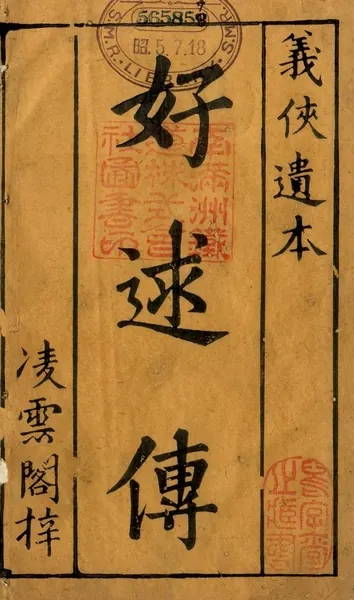
Haoqiu zhuan (translated into English variously as The Fortunate Union or The Pleasing History), also known as Hau Kiou Choaan, is a Chinese caizi jiaren ("scholar and beauty") novel published in the 17th century during the Qing Dynasty. The author is known only under the name "Man of the Teaching of Names" (名教中人; Míngjiāo Zhōngrén; Ming-chiao Chung-jen). The identity of the author and exact date of publishing are unknown. Caizi jiaren fictional works published at that time were typically published and written under a pseudonym. According to Philippe Postel, author of "Les traductions françaises du Haoqiu zhuan", the most commonly stated date of authorship is 1683, at the beginning of the Qing Dynasty. After 1712, the story was given the subtitle Xiayi fengyue zhuan (俠義風月傳; 侠义风月传; Xiáyì fēngyuè zhuàn; Hsia-i Feng-yüeh chuan, "A Tale of Chivalry and Love"). English language translation of the novel appeared as early as 1761, and then was translated into German in 1766. In 1810, George Staunton, who had lived in China while his father worked for George Macartney's diplomatic mission, confirmed to Western audiences that a Chinese person created this work. Chloë F. Starr, author of Red-Light Novels of the Late Qing, wrote that this novel was among the best-known caizi jiaren novels. Maram Epstein, author of Competing Discourses: Orthodoxy, Authenticity, and Engendered Meanings in Late Imperial Chinese Fiction, described the novel as being "moralistic". The story has eighteen chapters.
Licencia del texto: CC BY-SA 4.0 · Fuente
Detalles
- Tipo
- Libro
- Estreno
- 1 de enero de 1683
- Géneros
- Caizi jiaren
- Países
- Qing dynasty
Portada: Wikimedia Commons · anonymous xylography · Public domain · Fuente
