Médias por categoria
Sua avaliação
Entre para avaliarEm outros sites
Notas de outros sites pertencem a eles; cada link abre a fonte.
Sinopse
Ainda não disponível em português — exibindo a versão em inglês.
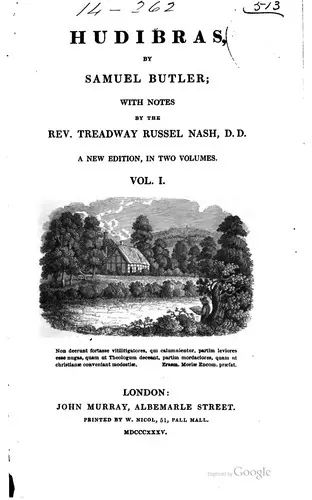
Hudibras () is a vigorous satirical poem, written in a mock-heroic style by Samuel Butler (1613–1680), and published in three parts in 1663, 1664 and 1678. The action is set in the last years of the Interregnum, around 1658–60, immediately before the restoration of Charles II as king in May 1660. The story shows Hudibras, a Cromwellian knight and colonel in the New Model Army, being regularly defeated and humiliated, as in Miguel de Cervantes' Don Quixote, Butler's main inspiration. Colonel Hudibras' humiliations arrive sometimes by the skills and courage of women, and the epic ends with a witty and detailed declaration by the latest female to get the better of him that women are intellectually superior to men. Hudibras is notable for its longevity: from the 1660s, it was more or less always in print, from many different publishers and editors, till the period of the First World War (see below). Apart from Lord Byron's masterpiece Don Juan (1819–24), there are few English verse satires of this length (over 11,000 lines) that have had such a long and influential life in print. The satire "delighted the royalists but was less an attack on the puritans than a criticism of antiquated thinking and contemporary morals, and a parody of old-fashioned literary form." Or, as one of the poem's editors has written: "Hudibras, like Gulliver's Travels, is an unique imaginative work, capable of shocking, enlivening, provoking, and entertaining the reader in a peculiar and distinctive way, vigorously witty and powerful in its invective. It is the ebullient inventiveness of Hudibras which is likely to commend it to the modern reader and which raises it above its historical context. Justice still remains to be done not to Butler the moralist but to Butler the poet." While the original proverb appears in King James Version of the Bible, Book of Proverbs, 13:24, this poem is the first appearance of the quotation and popularised the aphorism "spare the rod and spoil the child". All Hudibras quotations and references below, unless otherwise marked, relate to the standard modern edition (Oxford, 1967), edited by John Wilders.
Licença do texto: CC BY-SA 4.0 · Fonte
Detalhes
- Tipo
- Livro
- Lançamento
- 1 de janeiro de 1663
- Gêneros
- satire
- Criado por
- Samuel Butler