Il-Kantilena
Nota de la comunidad
27 valoraciones
Pietru Caxaro
Promedios por categoría
Tu valoración
Inicia sesión para valorarSinopsis
Aún no disponible en español — se muestra la versión en inglés.
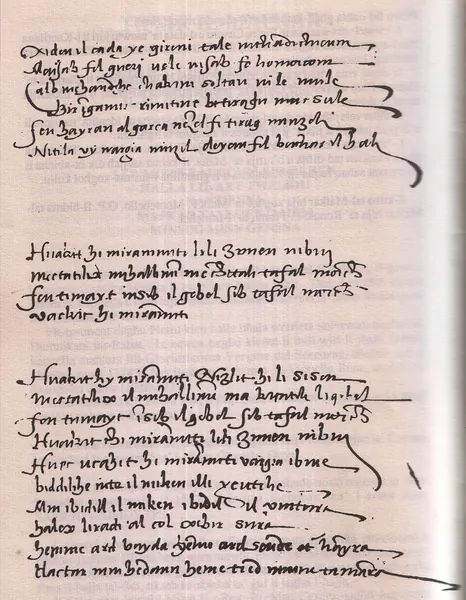
Il-Kantilena (lit. 'The old song') is the oldest known literary text in the Maltese language. It dates from the 15th century (no later than 1485, the death of its author, and probably from the 1470s), but was not found until 1966 by the historian Mikiel Fsadni. The poem is attributed to Pietru Caxaro, and was recorded by Caxaro's nephew, Brandano, in his notarial register (Dec. 1533 – May 1563). It is preserved at the Notarial Archives in Valletta. In April 2025, Il-Kantilena was added to UNESCO's Memory of the World Register. Although written in Maltese, in Latin script, it was a very early form that had not yet been influenced much by Romance languages, and is thus an example of Old Maltese. This text contains many Arabic morphemes. The only Romance words are vintura 'luck', sometimes translated into English as 'fate', and et 'and'. In general, early Maltese texts contain very little non-Arabic vocabulary; even in later texts, poetry tends to use more Arabic vocabulary than general language use does, therefore while certainly of historical interest, Il-Kantilena most likely does not reflect the spoken language of the common Maltese of the time, but rather that of the elite who spoke a stilted form more pleasing to the ruling class. However, literary evidence suggests that the spoken language in the 13th century was Arabic since ire was raised when the bishop of Malta resident in Sicily appointed Italian-speaking priests to the island. Both islands were occupied by the Arabs in the early medieval period, but Malta's relative isolation limited the diffusion of Italian cognates until much later. In December 2024, the University of Malta unveiled a large mural in the tunnel beneath Regional Road, directed by Pep Walls and painted by the students Sherise Attard, Edera Muscat, Kristine Saliba Caruana, Peter Aquilina, Carlos Cutajar, Aden Cacciattolo, and Mikael Scicluna. Themed around the Maltese identity and destruction of Maltese fauna, it features verses from Il-Kantilena. Its essence is to "communicate the sense of movement as well as the change in our genetics that we pass on over time", in Scicluna's words, and the line "Waqgħet hi, imrammti, l’ili żmien nibni" [It (she) fell, my building, its foundations collapsed] evokes a crab's imagined anger at the loss of their habitat.
Licencia del texto: CC BY-SA 4.0 · Fuente
Detalles
- Tipo
- Libro
- Creado por
- Pietru Caxaro
Portada: Wikimedia Commons · Peter Caxaro · Public domain · Fuente
