Mariana
Nota de la comunidad
8 valoraciones
1832 · Alfred Tennyson
Promedios por categoría
Tu valoración
Inicia sesión para valorarSinopsis
Aún no disponible en español — se muestra la versión en inglés.
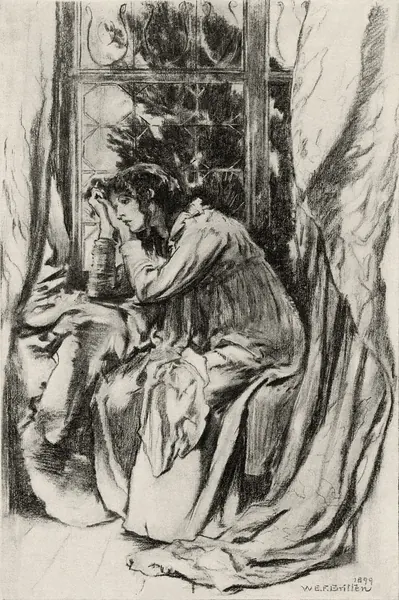
"Mariana" is a poem by Alfred, Lord Tennyson, published in 1830. The poem follows a common theme in much of Tennyson's work—that of despondent isolation. The subject of "Mariana" is a woman who continuously laments her lack of connection with society. The isolation defines her existence, and her longing for a connection leaves her wishing for death at the end of every stanza. The premise of "Mariana" originates in William Shakespeare's Measure for Measure, but the poem ends before Mariana's lover returns. Tennyson's version was adapted by others, including John Everett Millais and Elizabeth Gaskell, for use in their own works. The poem was well received by critics, and it is described by critics as an example of Tennyson's skill at poetry. Tennyson wrote "Mariana" in 1830 and printed it within his early collection Poems, Chiefly Lyrical. Previously, he contributed poems to the work Poems by Two Brothers (1827), where his early poems dealing with isolation and memory can be found. The theme was continued in the later collection, with poems like "Mariana", "Ode to Memory", and others representing the earlier poems. During a visit to the Pyrenees during the summer of 1830, Tennyson sought to give aid to Spanish rebels. During that time, he was affected by his experience and the influence appears in "Mariana in the South", which was published in 1832; it is a later version that follows the idea of "The Lady of Shalott".
Licencia del texto: CC BY-SA 4.0 · Fuente
Detalles
- Tipo
- Libro
- Estreno
- 1 de enero de 1832
- Creado por
- Alfred Tennyson
Portada: Wikimedia Commons · William Edward Frank Britten (1848–1916) · Public domain · Fuente
