Promedios por categoría
Tu valoración
Inicia sesión para valorarEn otros sitios
Las notas de otros sitios les pertenecen; cada enlace abre la fuente.
Sinopsis
Aún no disponible en español — se muestra la versión en inglés.
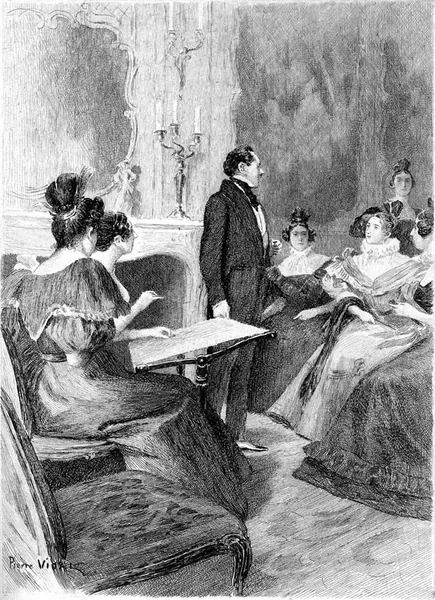
Modeste Mignon is a novel by the French writer Honoré de Balzac. It is the fifth of the Scènes de la vie privée (Scenes of Private Life) in La Comédie humaine. The first part of the novel was serialized in a bowdlerized edition in the Journal des débats in April, May and July 1844. A revised and expanded version of the work was later published by Chlenowski in two parts under the titles Modeste Mignon and Les Trois amoureux (The Three Suitors). The third and final edition of the novel appeared in 1846 as part of Furne's complete edition of La Comédie humaine. Modeste Mignon was the third work in Volume 4, or the twenty-third of the Scènes de la vie privée. Balzac wrote Modeste Mignon after returning to France from Saint Petersburg, where he spent the summer of 1843 with his future wife the Countess Ewelina Hańska, to whom the work is dedicated: Daughter of an enslaved land, angel through love, witch through fancy, child by faith, aged by experience, man in brain, woman in heart, giant by hope, mother through sorrows, poet in thy dreams – to thee belongs this book, in which thy love, thy fancy, thy experience, thy sorrow, thy hope, thy dreams, are the warp through which is shot a woof less brilliant than the poesy of thy soul, whose expression, when it shines upon thy countenance, is, to those who love thee, what the characters of a lost language are to scholars. In Saint Petersburg Balzac had read a French translation of the correspondence between the German poet Johann Wolfgang von Goethe and the young German Romantic Bettina Brentano, who was thirty-seven years his junior. This work, as well as Balzac's own correspondence with young admirers, clearly inspired Modeste Mignon, a novel whose plot hinges on the correspondence between a famous poet and a young female admirer of his work. Parallels have also been detected with Balzac's experiences in St Petersburg: there is much of Countess Hańska in the character of Modeste, while her father's cousin Wenceslas Rzewuski has been compared to Modeste's father Charles Mignon.
Licencia del texto: CC BY-SA 4.0 · Fuente
Detalles
- Tipo
- Libro
- Estreno
- 1 de enero de 1844
- Géneros
- social novel
- Creado por
- Honoré de Balzac
- Países
- France
Portada: Wikimedia Commons · Pierre Vidal · Public domain · Fuente
