Promedios por categoría
Tu valoración
Inicia sesión para valorarEn otros sitios
Las notas de otros sitios les pertenecen; cada enlace abre la fuente.
Sinopsis
Aún no disponible en español — se muestra la versión en inglés.
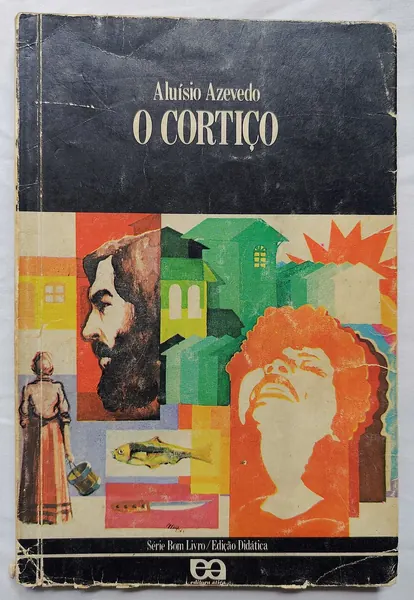
O Cortiço ('The Slum') is an influential Brazilian novel written in 1890 by Aluísio Azevedo. The novel depicts a part of Brazil's culture in the late 19th century, represented by a variety of colorful characters living in a single Rio de Janeiro tenement. It is written with the intention of belonging to the Realism movement leaning towards Naturalism, much like Flaubert's Madame Bovary. Azevedo's The Slum tells the stories of Portuguese and other European immigrants, mulattos, and former African slaves living and working together in a single community. It explores the author's intensely naturalistic beliefs, having various characters being defined and changed by their environment, race and social position. Examples are: the division between the unenthusiastic, yet passionate, mulattos and the hard-working, driven Portuguese immigrants, how the climate and culture of Brazil can slowly transform these immigrants' behavior in atavistic ways. In addition, the role of women is a key theme, with all female characters in one way or another revealing their purpose in the slum. In 2013, the book became a musical on Brazilian Broadway starring Gabriel Boni Rodrigues and Rafael Morelli. Today the play is with Daniel Tupauan and Christian Coronel.
Licencia del texto: CC BY-SA 4.0 · Fuente
Detalles
- Tipo
- Libro
- Estreno
- 1 de enero de 1890
- Géneros
- naturalism
- Creado por
- Aluísio Azevedo
- Países
- Brazil
Portada: Wikimedia Commons · Túllio F · CC0 · Fuente
