Promedios por categoría
Tu valoración
Inicia sesión para valorarSinopsis
Aún no disponible en español — se muestra la versión en inglés.
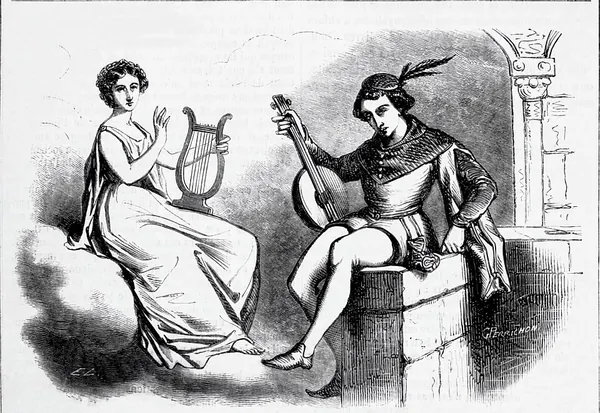
Odes et Ballades (French pronunciation: [ɔd e balad]), published in 1828, is the most complete version of a collection of poems by Victor Hugo written and published between 1822 and 1828. It includes five books of odes and one book of ballads. They are among his very earliest works and reflect the Catholic royalist views of his early twenties. He would write seven different prefaces for it, dated 1822, 1823, 1824, 1826, 1828, followed by one in 1853, at which time he was in self-imposed exile, and a final one in 1880. Hugo expresses a view of the difference between "order" and "regularity" which elevates the former on the basis that an irregularity in art can have its own logic, or order, and achieve effects impossible to regularity, or classical evenness. The version of 1826 received a generally positive review from the 22-year-old Sainte-Beuve in the Globe (January 1827), and this review resulted in their friendship. The collection includes Ode à la Colonne de la Place Vendôme, a response to the Austrian ambassador's decision in early 1827 to stop recognizing Napoleonic titles. First published in the Journal des débats, it represents the first praise of Napoleon in Hugo's work (but not a major political shift as he later claimed). It should be distinguished from the ode on the same subject in Les Chants du crépuscule.
Licencia del texto: CC BY-SA 4.0 · Fuente
Detalles
- Tipo
- Libro
- Estreno
- 1 de enero de 1828
- Géneros
- poetry
- Creado por
- Victor Hugo
- Países
- France
Portada: Wikimedia Commons · Georges-Léon-Alfred Perrichon / After Eustache Lorsay · Public domain · Fuente
