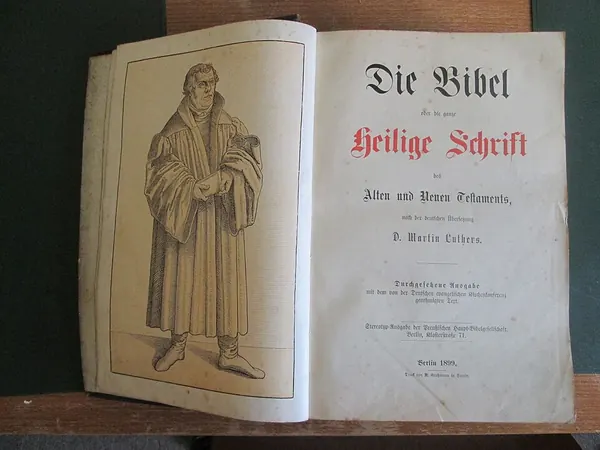
Protestant Bible
Nota da comunidade
11 avaliações
Médias por categoria
Sua avaliação
Entre para avaliarSinopse
Ainda não disponível em português — exibindo a versão em inglês.
A Protestant Bible is a Christian Bible whose translation or revision was produced by Protestant Christians, influenced by Protestant doctrine and intended for use in the Protestant churches. Typically translated into a vernacular language, such Bibles comprise 39 books of the Old Testament (according to the Hebrew Bible canon, known especially to non-Protestant Christians as the protocanonical books) and 27 books of the New Testament, for a total of 66 books. Some Protestants, especially in the early modern period, use or used Bibles which also include eleven or more books in addition to the 66 books, typically placed in a separate section known as the Apocrypha (though these are not considered canonical). This is in contrast to the Catholic Bible canon which comprises 73 books, including seven deuterocanonical books as a part of the Old Testament. The division between protocanonical and deuterocanonical books is not accepted by all Protestants who simply view that books as being not canonical and therefore classify books found in the Catholic Deuterocanon, along with other books, as part of the Apocrypha. Furthermore, the Eastern Orthodox Bible comprises 76 to 79 books, depending on the Greek or Slavic tradition, while the Coptic Bible has 73 books and the Ethiopian Bible has a larger canon comprising 81 books. All these non-Protestant bibles have the 66 books of the Protestant canon within their respective larger canons. Sometimes the term "Protestant Bible" is simply used as a shorthand for a bible which contains only the 66 books of the Old and New Testaments. It was in Luther's Bible of 1534 that the Apocrypha was first published as a separate intertestamental section. Early modern English Bibles also generally contained an Apocrypha section but in the years following the first publication of the King James Bible in 1611, printed English Bibles increasingly omitted the Apocrypha. However, Lutheran and Anglican churches have still included the Apocrypha in their lectionaries, holding them to be useful for devotional use. The practice of including only the Old and New Testament books within printed Bibles was standardized among many English-speaking Protestants following a 1825 decision by the British and Foreign Bible Society. More recently, English-language Bibles are again including the Apocrypha, and they may be printed as intertestamental books. In contrast, Evangelicals vary among themselves in their attitude to and interest in the Apocrypha but agree in the view that it is non-canonical.
Licença do texto: CC BY-SA 4.0 · Fonte
Detalhes
- Tipo
- Livro
Capa: Wikimedia Commons · AnRo0002 · CC0 · Fonte
