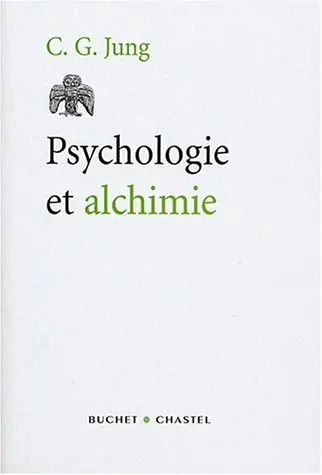
Psychology and Alchemy
Nota da comunidade
11 avaliações
1944 · Carl Jung
Médias por categoria
Sua avaliação
Entre para avaliarEm outros sites
Notas de outros sites pertencem a eles; cada link abre a fonte.
Sinopse
Ainda não disponível em português — exibindo a versão em inglês.
Psychology and Alchemy, volume 12 in The Collected Works of C. G. Jung, is Carl Jung's study of the analogies between alchemy, Christian dogma, and psychological symbolism. Alchemy is central to Jung's hypothesis of the collective unconscious. This book begins with an outline of the process and aims of psychotherapy as seen by Jung. It then moves on to work out the analogies mentioned above and his own understanding of the analytic process. Jung reminds us of the dual nature of alchemy, comprising both the chemical process and a parallel mystical component. He also discusses the seemingly deliberate mystification of the alchemists. Finally, in using the alchemical process to provide insights into individuation, Jung emphasises the importance of alchemy in relating to us the transcendent nature of the psyche. In Psychology and Alchemy, Jung makes the case that the philosopher's stone is a latent reality that exists within the self rather than an external object, and that the alchemists were attempting to communicate this internal dialogue—a conversation between the various components of the human psyche—through the use of esoteric symbols and terminology of the day. Detailed abstracts of each chapter are available online.
Licença do texto: CC BY-SA 4.0 · Fonte
Detalhes
- Tipo
- Livro
- Lançamento
- 1 de janeiro de 1944
- Criado por
- Carl Jung