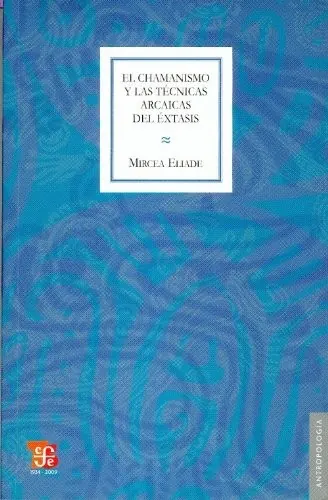
Shamanism: Archaic Techniques of Ecstasy
Nota da comunidade
5 avaliações
1951 · Mircea Eliade
Médias por categoria
Sua avaliação
Entre para avaliarEm outros sites
Notas de outros sites pertencem a eles; cada link abre a fonte.
Sinopse
Ainda não disponível em português — exibindo a versão em inglês.
Shamanism: Archaic Techniques of Ecstasy is a historical study of the different forms of shamanism around the world written by the Romanian historian of religion Mircea Eliade. It was first published in France by Librarie Payot under the French title of Le Chamanisme et les techniques archaïques de l'extase in 1951. The book was subsequently translated into English by Willard R. Trask and published by Princeton University Press in 1964. At the time of the book's writing, Eliade had earned a PhD studying Hinduism in India before becoming involved with far right politics in his native Romania. After the rise of the communist government, he fled to Paris, France, in 1945, where he took up an academic position and began studying shamanism, authoring several academic papers on the subject before publishing his book. The first half of Shamanism deals with the various elements of shamanic practice, such as the nature of initiatory sickness and dreams, the method for obtaining shamanic powers, the role of shamanic initiation and the symbolism of the shaman's costume and drum. The book's second half looks at the development of shamanism in each region of the world where it is found, including Central and North Asia, the Americas, Southeastern Asia and Oceania and also Tibet, China and the Far East. Eliade argues that all of these shamanisms must have had a common source as the original religion of humanity in the Palaeolithic. On publication, Eliade's book was recognised as a seminal and authoritative study on the subject of shamanism. In later decades, as anthropological and historical scholarship increased and improved, elements of the book came under increasing scrutiny, as did Eliade's argument that there was a global phenomenon that could be termed "shamanism" or that all shamanisms had a common source. His book also proved to be a significant influence over the Neoshamanic movement which developed in the western world in the 1960s and 1970s.
Licença do texto: CC BY-SA 4.0 · Fonte
Detalhes
- Tipo
- Livro
- Lançamento
- 1 de janeiro de 1951
- Criado por
- Mircea Eliade