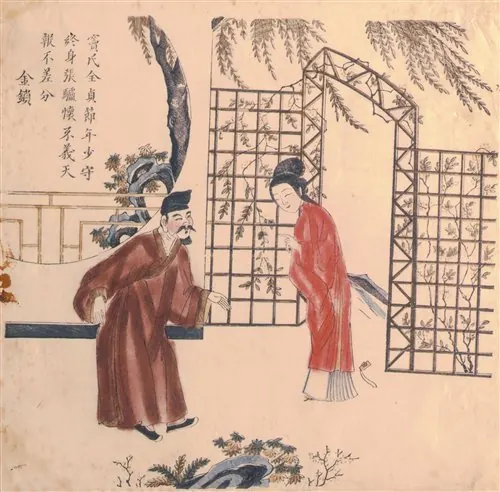
La injusticia contra Dou E
Nota de la comunidad
24 valoraciones
1292 · Guan Hanqing
Promedios por categoría
Tu valoración
Inicia sesión para valorarSinopsis
Aún no disponible en español — se muestra la versión en inglés.
Dou E Yuan, commonly translated as The Injustice to Dou E, and also known as Snow in Midsummer, is a Chinese zaju play written by Guan Hanqing (c. 1241–1320) during the Yuan dynasty. The full Chinese title of the play is Gan Tian Dong Di Dou E Yuan, which roughly translates to The Injustice to Dou E that Touched Heaven and Earth. The story follows a child bride turned widow, Dou E, who is wrongly convicted of crimes by a corrupt court official for actions perpetrated by a rejected suitor, Zhang Lü'er. After her execution, three prophesied phenomena occur to prove her innocence, including blood raining from the sky, snow in June and a three-year drought. After a visit from the ghost of Dou E, her father eventually brings the corrupt court official, a doctor and Zhang to justice, thereby vindicating his daughter. Today, the phrase "snowing in June" is still widely used among Chinese speakers as a metaphor for a miscarriage of justice. The story has been repeatedly used and modified by later dramatists and remains one of Guan's most popular works.
Licencia del texto: CC BY-SA 4.0 · Fuente
Detalles
- Tipo
- Libro
- Estreno
- 1 de enero de 1292
- Creado por
- Guan Hanqing
- Países
- People's Republic of China
Portada: Wikimedia Commons · Public domain · Fuente
