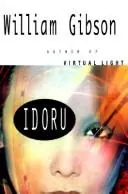
Idoru
Nota de la comunidad
14 valoraciones
1996 · William Gibson
Promedios por categoría
Tu valoración
Inicia sesión para valorarEn otros sitios
Las notas de otros sitios les pertenecen; cada enlace abre la fuente.
Sinopsis
Aún no disponible en español — se muestra la versión en inglés.
Idoru is a 1996 science fiction novel by William Gibson, published in the United States by G. P. Putnam's Sons. It is the second novel in Gibson's Bridge trilogy, following Virtual Light and preceding All Tomorrow's Parties. Set mainly in a near-future Tokyo rebuilt after a major earthquake, Idoru follows two converging plotlines. Colin Laney, a former data analyst with an unusual ability to detect significant patterns in information, is hired to investigate Rez, one half of the rock duo Lo/Rez, after Rez announces his intention to marry Rei Toei, a virtual Japanese celebrity. Chia Pet McKenzie, a teenage fan from Seattle, travels to Tokyo to learn whether the rumor is true and becomes caught in a scheme involving illegal nanotechnology. Critical discussion of the novel has focused on its treatment of virtual celebrity, Japanese media culture, embodiment, and the relation between physical and digital spaces. Rei Toei has been read as both a media construct and a figure through which the novel examines desire, artificial personality, and the boundary between human and nonhuman identity. The novel's virtual reconstruction of Kowloon Walled City, Hak Nam, has also been discussed as one of the Bridge Trilogy's central interstitial spaces. Idoru received generally favorable contemporary reviews, with critics praising Gibson's style, Tokyo setting, and treatment of media-saturated near-future culture, while some found the pacing or ending less successful. The novel placed sixth in the 1997 Locus Poll Award for Best Science Fiction Novel.
Licencia del texto: CC BY-SA 4.0 · Fuente
Detalles
- Tipo
- Libro
- Estreno
- 4 de septiembre de 1996
- Géneros
- cyberpunk, science fiction
- Creado por
- William Gibson
- Países
- United States