Il teatro alla moda
Nota de la comunidad
5 valoraciones
1720 · Benedetto Marcello
Promedios por categoría
Tu valoración
Inicia sesión para valorarSinopsis
Aún no disponible en español — se muestra la versión en inglés.
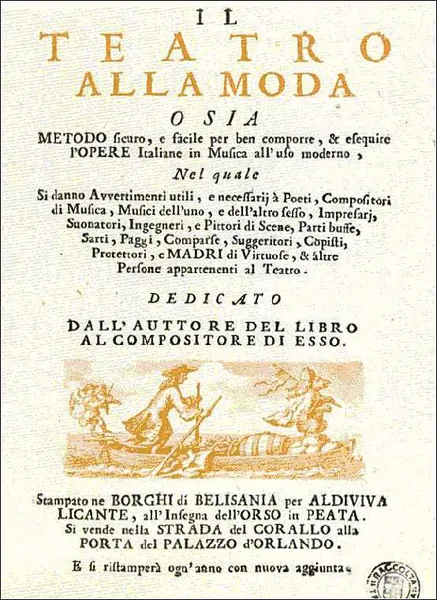
Il teatro alla moda (The Fashionable Theater) is a satirical pamphlet in which its author, the Venetian composer Benedetto Marcello (1686–1739), vents his critical opinions on the milieu of the Italian opera seria in the first decades of the eighteenth century. It was first published anonymously in Venice by the end of 1720. Virtually every aspect of opera seria and its social environment is mercilessly criticized by Marcello: the artificiality of plots, the stereotyped format of music, the extravagant scenography and machinery, the inability and venality of composers and poets, the vanity and vulgarity of singers, the avidity of impresarios, the ineptitude of musicians. It is obvious that Marcello's polemic was prompted by visits to the Teatro Sant'Angelo and Teatro San Moisè in Venice in October 1720, when performances of Antonio Vivaldi's opera La verità in cimento were given at the Sant'Angelo and performances of Giuseppe Maria Buini's opera Il Filindo were given at the San Moisè. This is revealed by a veiled reference in anagram to Vivaldi on the title page, along with references to six female singers (with names set off in capital letters) who appeared in the two operas, three in Vivaldi's opera and three in Buini's opera.
Licencia del texto: CC BY-SA 4.0 · Fuente
Detalles
- Tipo
- Libro
- Estreno
- 1 de enero de 1720
- Géneros
- polemical lampoon
- Creado por
- Benedetto Marcello
Portada: Wikimedia Commons · Creator:Benedetto Marcello fr:Benedetto Giacomo Marcello · Public domain · Fuente
