Promedios por categoría
Tu valoración
Inicia sesión para valorarSinopsis
Aún no disponible en español — se muestra la versión en inglés.
Kudrun (sometimes known as the Gudrunlied or Gudrun), is an anonymous Middle High German heroic epic. The poem was likely composed in either Austria or Bavaria around 1250. It tells the story of three generations of the ruling house of Hetelings on the North Sea, but is primarily the story of Kudrun, who is abducted by the Norman prince Hartmut who desires to marry her. Kudrun remains true to her fiancé Herwig and eventually is rescued. After the defeat of the Normans, however, Kudrun ensures that peace will be kept between the two peoples by arranging for marriages and alliances. Although the story of Kudrun is very likely the invention of the poet, the story of her parents has its origins in a common Germanic tale known in Scandinavia as the Hjaðningavíg: it tells how Kudrun's mother, Hilde, eloped with her father, Hetel, against the will of Hilde's father, Hagen. In Kudrun, this originally tragic tale has been transformed into a happy one that serves as the prehistory of Kudrun herself. The poem is notable for the important and active role played by its female characters. It is widely seen as a deliberate antithesis to the Nibelungenlied, to which it alludes in numerous ways. Kudrun does not appear to have been successful with medieval audiences, and survives in only one manuscript. Since its rediscovery, however, it has been popular with philologists, and this has resulted in a relatively wide modern reception. Of German heroic poems, it has been called "second in stature only to the Nibelungenlied."
Licencia del texto: CC BY-SA 4.0 · Fuente
Detalles
- Tipo
- Libro
- Estreno
- 1 de enero de 1235
- Géneros
- epic poem
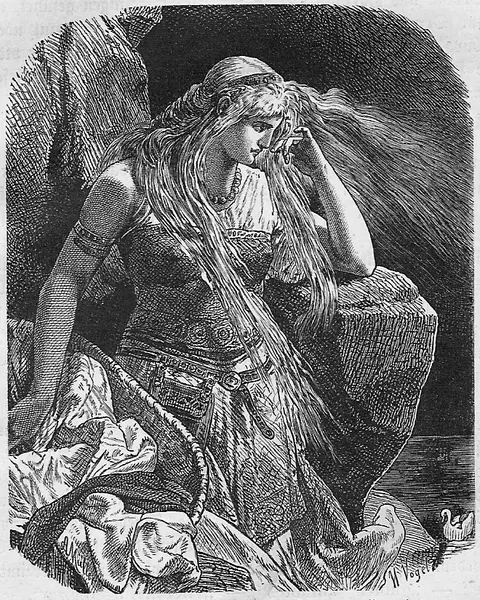
Portada: Wikimedia Commons · Otto von Leixner (Herausgeber) · Public domain · Fuente
