Promedios por categoría
Tu valoración
Inicia sesión para valorarEn otros sitios
Las notas de otros sitios les pertenecen; cada enlace abre la fuente.
Sinopsis
Aún no disponible en español — se muestra la versión en inglés.
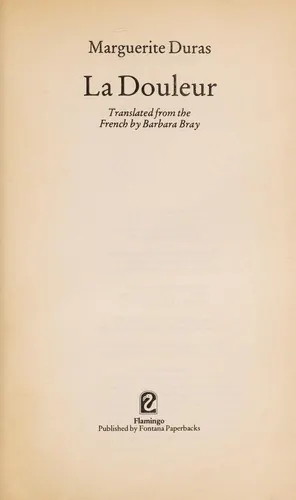
La Douleur (War: A Memoir) is a collection of six texts by Marguerite Duras published in 1985. Two texts are invented: L'ortie brisée and Aurélia Paris. The remaining four texts are based on lived experience. In La Douleur, her husband becomes Robert L. and others also retain the names used as resistants. Monsieur X. dit ici Pierre Rabier, recounts her association with the man who arrested her husband (and his name is changed to protect his wife and child). In Albert des Capitales and Ter le milicien, Duras becomes Thérèse and these are accounts of the immediate aftermath of Paris being liberated, where those who sold the Jews to the Gestapo, and those who served in the Vichy militia were tried by resistance groups. In Albert des Capitales, Thérèse (Duras) extorts a confession under torture of man who sold Jews to the Gestapo. Her colleagues show their disapproval and rather than the expected summary execution, she asks D. to let him walk away. Introducing the text La Douleur, she says she had forgotten ever writing the diaryin which she recorded her account of the waiting for, and the return of her husband, Robert Antelme (a resistant taken 1 June 1944, found at Dachau, and returned to France moribund by fellow resistance workers Denys Mascolo and François Mitterrand). The diary would seem also to have included an earlier text about Monsieur X, and rewritten to describe a man who as a functionary could not stand to see her not putting on flesh when he wanted her to, but could stand making arrests and sending people to their deaths ("Il supporte d'arrêter, d'envoyer à la mort, mais ça, il ne le supporte pas, que je ne grossisse pas quand il le veut".) In writing about X she says: "I find it extremely difficult to describe his essential stupidity." (J'ai beaucoup de mal à lui décrire son imbécillité essentielle.)
Licencia del texto: CC BY-SA 4.0 · Fuente
Detalles
- Tipo
- Libro
- Estreno
- 1 de enero de 1985
- Géneros
- autobiography
- Creado por
- Marguerite Duras
- Países
- France