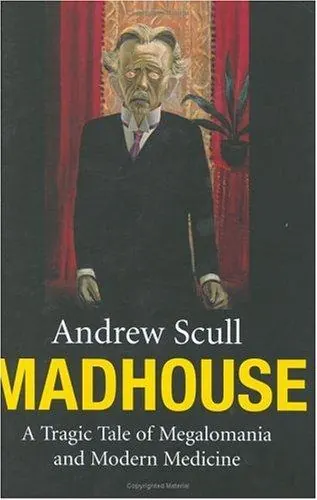
Madhouse: A Tragic Tale of Megalomania and Modern Medicine
Nota de la comunidad
9 valoraciones
2005 · Andrew Scull
Promedios por categoría
Tu valoración
Inicia sesión para valorarEn otros sitios
Las notas de otros sitios les pertenecen; cada enlace abre la fuente.
Sinopsis
Aún no disponible en español — se muestra la versión en inglés.
Madhouse: A Tragic Tale of Megalomania and Modern Medicine is a 2005 book by the psychiatric sociologist Andrew Scull which discusses the work of the controversial psychiatrist Henry Cotton at Trenton State Hospital in New Jersey in the 1920s. Cotton became convinced that insanity was fundamentally a toxic disorder and he surgically removed body parts to try to improve mental health. This often began with the removal of teeth and tonsils: An 18 year-old girl with agitated depression successively had her upper and lower molars extracted, a tonsillectomy, sinus drainage, treatment for an infected cervix, removal of intestinal adhesions—all without effecting improvement in her psychiatric condition. Then the remainder of her teeth were removed and she was sent home, pronounced cured. Scull argues that Cotton's obsession with focal sepsis as the root cause of mental illness "persisted in spite of all evidence to the contrary and the frightening incidence of death and harm from the operations he initiated". Cotton's approach attracted some detractors, but the medical establishment of the day did not effectively renounce or discipline him. One reviewer called Madhouse "a fine piece of historical research with a modern relevance", and added that "it makes compelling reading".
Licencia del texto: CC BY-SA 4.0 · Fuente
Detalles
- Tipo
- Libro
- Estreno
- 1 de enero de 2005
- Géneros
- non-fiction
- Creado por
- Andrew Scull