Promedios por categoría
Tu valoración
Inicia sesión para valorarSinopsis
Aún no disponible en español — se muestra la versión en inglés.
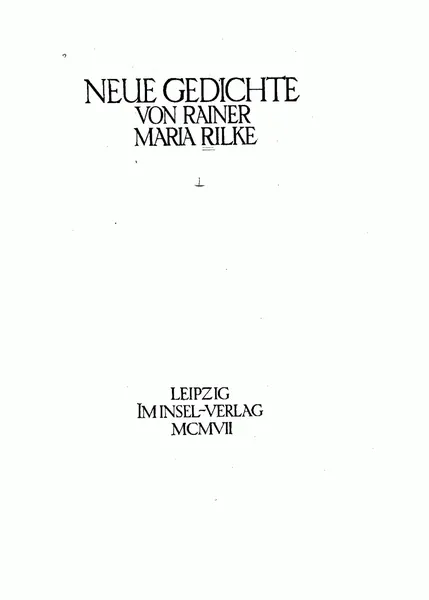
New Poems (German: Neue Gedichte) is a two-part collection of poems written by Bohemian-Austrian poet and novelist Rainer Maria Rilke (1875–1926). The first volume, dedicated to Elisabeth and Karl von der Heydt was composed from 1902 to 1907 and was published in the same year by Insel Verlag in Leipzig. The second volume (New Poems: The Other Part), dedicated to Auguste Rodin, was completed in 1908 and published by the same publisher. With the exception of eight poems written in Capri, Rilke composed most of them in Paris and Meudon. At the start of each volume he placed, respectively, Früher Apollo (Early Apollo) and Archaïscher Torso Apollos (Archaic Torso of Apollo), poems about sculptures of the poet-God. These poems, many of them sonnets, are often intensely focused on the visual. They show Rilke aware of the objective world and of the people amongst whom he lives. The poems are astonishingly concentrated: both short, and compacting a profundity of experience into small compass. He called them Dinggedichte (Thing-Poems), intending to reveal both that the poems were about "things" and that the poems had become, so concentrated and whole in themselves were they, things (poetic objects) themselves. Along with The Notebooks of Malte Laurids Brigge, the collection is considered to be the main work of his middle period, which clearly stands out from the work preceding and following it. It marks a shift from the emotive poetry of ecstatic subjectivity and interiority, which somewhat dominates his three-part The Book of Hours, to the objective language of the Dinggedicte. With this new poetic orientation, which was influenced by the visual arts and especially Rodin, Rilke came to be considered one of the most important poets of literary modernism.
Licencia del texto: CC BY-SA 4.0 · Fuente
Detalles
- Tipo
- Libro
- Estreno
- 1 de enero de 1907
- Géneros
- poetry
- Creado por
- Rainer Maria Rilke
Portada: Wikimedia Commons · Rainer Maria Rilke · Public domain · Fuente
_A_001.gif)