Süleymanname
Nota de la comunidad
15 valoraciones
Promedios por categoría
Tu valoración
Inicia sesión para valorarSinopsis
Aún no disponible en español — se muestra la versión en inglés.
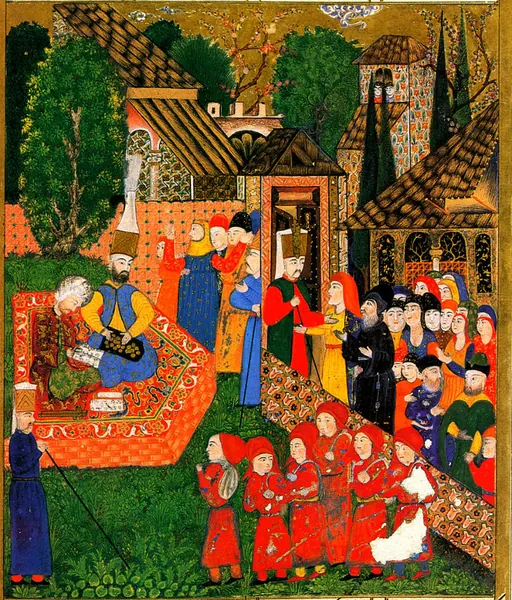
The Süleymannâme (or Sulaiman-nama; lit. 'Book of Suleiman', Topkapı Palace Museum Manuscript Library, TSMK H.1517, completed circa 1558) is an illustration of Suleiman the Magnificent's life and achievements. In 65 scenes the miniature paintings are decorated with gold, depicting battles, receptions, hunts and sieges. Written by Fethullah Arifi Çelebi in Persian verse, and illustrated by five unnamed artists, the Süleymannâme was the fifth volume of the first illustrated history of the Ottoman dynasty. It was written in the manner of the Iranian Shahnameh epic. The original version of the Süleymannâme lies in the Topkapi Palace Museum in Istanbul and there is another manuscript in Astan Quds Razavi, the manuscript numbered as manuscript 4249 in Astan Quds Razavi library. It is an account of Suleiman's first 35 years of his reign as ruler from 1520 to 1555. The portrayal of Suleiman's reign is idealized, as it not only includes the last exceptional events in world history, but also ends the timeline begun at creation with this perceived perfect ruler. The manuscript itself measures 25.4 by 37 centimeters and has 617 folios. In addition, it is organized in chronological order. This manuscript had a much more private use compared to other pieces of art produced for the Ottoman elite. The Süleymannâme has 69 illustrated pages since four topics out of the 65 represented are double-folio images. The cultural and political context of this work is Persian. This work is important because it allows for the acceptance of the sultan presenting himself in a divine image as well as presenting the ideas and expectations of the court. Arifi wrote in this epic poem 60,000 verses.
Licencia del texto: CC BY-SA 4.0 · Fuente
Detalles
- Tipo
- Libro
Portada: Wikimedia Commons · Ali Amir Beg (fl. 1558) · Public domain · Fuente
