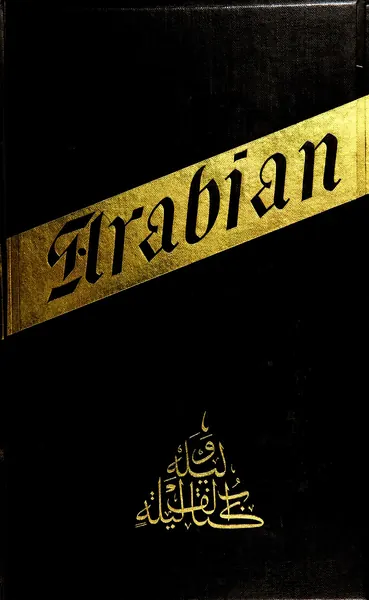
The Book of the Thousand Nights and a Night
Nota de la comunidad
7 valoraciones
1885
Promedios por categoría
Tu valoración
Inicia sesión para valorarEn otros sitios
Las notas de otros sitios les pertenecen; cada enlace abre la fuente.
Sinopsis
Aún no disponible en español — se muestra la versión en inglés.
The Book of the Thousand Nights and a Night (1888), subtitled A Plain and Literal Translation of the Arabian Nights Entertainments, is the only complete English language translation of One Thousand and One Nights (the Arabian Nights) to date – a collection of Middle Eastern and South Asian stories and folk tales compiled in Arabic during the Islamic Golden Age (8th−13th centuries) – by the British explorer and Arabist Richard Francis Burton (1821–1890). It stands as the only complete translation of the Macnaghten or Calcutta II edition (Egyptian recension) of the "Arabian Nights". Burton's translation was one of two unabridged and unexpurgated English translations done in the 1880s; the first was by John Payne, under the title The Book of the Thousand Nights and One Night (1882–1884, nine volumes). Burton's ten volume version was published almost immediately afterward with a slightly different title. This, along with the fact that Burton closely advised Payne and partially based his books on Payne's, led later to charges of plagiarism. Owing to the sexual imagery in the source texts (which Burton made a special study of, adding extensive footnotes and appendices on Oriental sexual mores) and to the strict Victorian laws on obscene material, both translations were printed as private editions for subscribers only, rather than being published in the usual manner. Burton's original ten volumes were followed by a further seven entitled The Supplemental Nights to the Thousand Nights and a Night (1886–1888). Burton's 17 volumes, while boasting many prominent admirers, have been criticised for their "archaic language and extravagant idiom" and "obsessive focus on sexuality"; they have even been called an "eccentric ego-trip" and a "highly personal reworking of the text". His voluminous and obscurely detailed notes and appendices have been characterised as “obtrusive, kinky and highly personal”. In 1982, the International Astronomical Union (IAU) began naming features on Saturn's moon Enceladus after characters and places in Burton's translation because “its surface is so strange and mysterious that it was given the Arabian Nights as a name bank, linking fantasy landscape with a literary fantasy”. (See List of geological features on Enceladus.)
Licencia del texto: CC BY-SA 4.0 · Fuente
Detalles
- Tipo
- Libro
- Estreno
- 1 de enero de 1885
- Géneros
- Arabic literature, fantasy
- Países
- United Kingdom
Portada: Wikimedia Commons · Richard Francis Burton (translator), The Karmashastra Society (publisher) · Public domain · Fuente
_(cover).jpg)