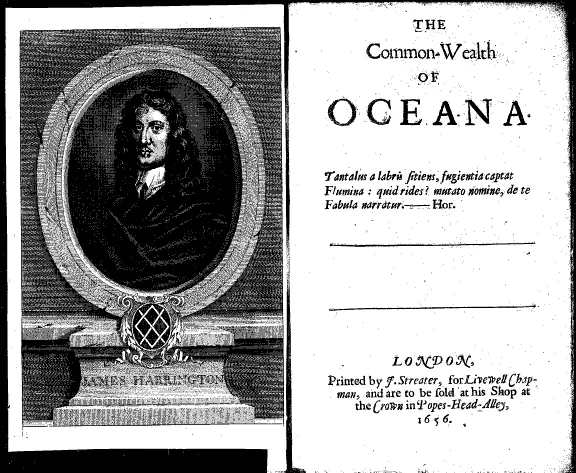
The Commonwealth of Oceana
Nota de la comunidad
10 valoraciones
1656 · James Harrington
Promedios por categoría
Tu valoración
Inicia sesión para valorarSinopsis
Aún no disponible en español — se muestra la versión en inglés.
The Commonwealth of Oceana ( oh-SEE-ə-nə), published in 1656, is a seminal work of political philosophy by the English politician and essayist James Harrington (1611–1677). The initial publication of Oceana was met with official censorship from Lord Protector Oliver Cromwell (1599–1658). The publication was eventually made available to the public, and it was dedicated to Cromwell. The Oceana in the title is an allegorical version of the Commonwealth of England. Cromwell himself is depicted in the book under the alias of the lawgiver Olphaeus Megalator. Harrington presents his ideas about a utopian republic. These include limitations to the amount of land which a single individual can hold, land distribution methods, and term limits for politicians which would prevent them from seeking re-election for a few years following the end of their previous term. The London printer John Streater published two first editions of the book between September and November 1656, known as the "Pakeman" and the "Chapman". The Chapman edition was advertised in the serial Mercurius Politicus, a "quasi-official" organ of the Commonwealth. In 1659, an abridged version of the book was published in three volumes, under the title The Art of Lawgiving. In 1700 the book was edited by John Toland and included in a collection of Harrington's works. Two 18th-century reprints of the book in Dublin included a version of Henry Neville's Plato Redivivus and an appendix of miscellaneous Harrington works alongside the main work. Harrington's modern editor J. G. A. Pocock criticized the book for its "baroque" and confusing style.
Licencia del texto: CC BY-SA 4.0 · Fuente
Detalles
- Tipo
- Libro
- Estreno
- 1 de enero de 1656
- Creado por
- James Harrington
Portada: Wikimedia Commons · James Harrington · Public domain · Fuente
