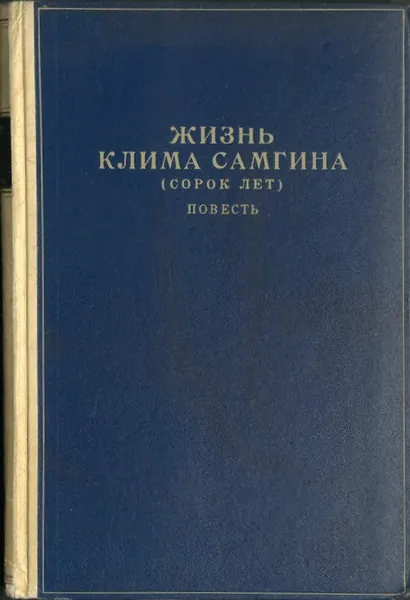
The Life of Klim Samgin
Nota de la comunidad
20 valoraciones
1925 · Maxim Gorky
Promedios por categoría
Tu valoración
Inicia sesión para valorarSinopsis
Aún no disponible en español — se muestra la versión en inglés.
The Life of Klim Samgin (Russian: Жизнь Клима Самгина, romanized: Zhizn' Klima Samgina) is a four-volume novel written by Maxim Gorky from 1925 up to his death in 1936. It is Gorky's most ambitious work, intended to depict "all the classes, all the trends, all the tendencies, all the hell-like commotion of the last century, and all the storms of the 20th century." It follows the decline of Russian intelligentsia from the start of the 1870s and the assassination of Alexander II to the 1917 Revolution, seen through the eyes of Klim Samgin, a typical petit-bourgeois intellectual. The fourth and final part is unfinished and abruptly ends with the beginning of the February Revolution, although as seen from Gorky's drafts and fragments, Lenin's return to Russia in April 1917 and Samgin's death may have been intended as the possible ending. It is believed to be the inspiration behind Boris Pasternak's Doctor Zhivago. The novel received controversial reputation among Gorky's contemporaries, although later it was described as a notable work of 20th-century literature. In English, the four volumes were published in 1930s under the titles Bystander, The Magnet, Other Fires and The Specter; the whole book was referred to as Forty Years: The Life of Clim Samghin, "a tetralogy of novels".
Licencia del texto: CC BY-SA 4.0 · Fuente
Detalles
- Tipo
- Libro
- Estreno
- 1 de enero de 1925
- Creado por
- Maxim Gorky
Portada: Wikimedia Commons · Verlag "Kniga" · Public domain · Fuente
