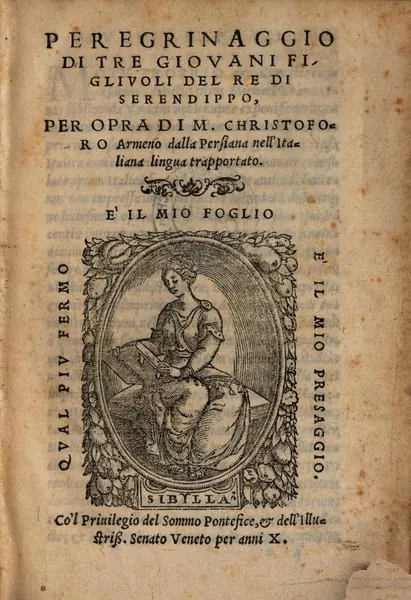
The Three Princes of Serendip
Nota de la comunidad
27 valoraciones
1557 · Cristoforo Armeno
Promedios por categoría
Tu valoración
Inicia sesión para valorarSinopsis
Aún no disponible en español — se muestra la versión en inglés.
"The Three Princes of Serendip" is the English version of the story Peregrinaggio di tre giovani figliuoli del re di Serendippo, published by Michele Tramezzino in Venice in 1557. Tramezzino claimed to have heard the story from Cristoforo Armeno, who had translated the Persian fairy tale into Italian, adapting Book One of Amir Khusrau's Hasht Bihisht of 1302. The story first came to English via a French translation, and now exists in several out-of-print translations. Serendip is the Classical Persian name for Sri Lanka (Ceylon). The story has become known in the English-speaking world as the source of the word serendipity, coined by Horace Walpole because of his recollection of the part of the "silly fairy tale" in which the three princes by "accidents and sagacity" discern the nature of a lost camel. Voltaire used a version of the story in his 1747 Zadig, contributing to both the evolution of detective fiction and, some have argued, how the scientific method is understood.
Licencia del texto: CC BY-SA 4.0 · Fuente
Detalles
- Tipo
- Libro
- Estreno
- 1 de enero de 1557
- Géneros
- imaginary voyage, epic poem, travel literature
- Creado por
- Cristoforo Armeno
- Países
- Italy
Portada: Wikimedia Commons · Cristoforo Armeno · Public domain · Fuente
