Une double famille
Nota de la comunidad
16 valoraciones
1830 · Honoré de Balzac
Promedios por categoría
Tu valoración
Inicia sesión para valorarSinopsis
Aún no disponible en español — se muestra la versión en inglés.
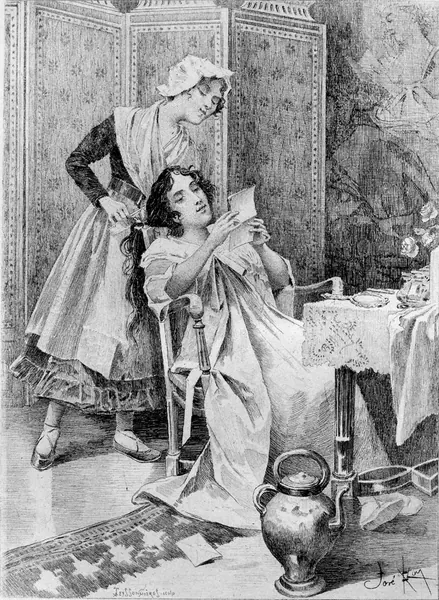
Une double famille (A Second Home) is a lengthy short story by Honoré de Balzac. The story first appeared in 1830 under the title La femme vertueuse (The Virtuous Woman). It was subsequently published in 1832 by Mame et Delaunay as part of Balzac's Scènes de la vie privée (Scenes from Private Life). In 1835, it appeared, in an edition by Madame Béchet, in the collection Études de mœurs (Studies of Manners). The novel only acquired its present title in 1842, when the fifth edition appeared in Volume I of the Scenes from Private Life, which was also the first volume of Balzac's La Comédie humaine. The novel comprises two parts, two stories, which are really two sides of the same story. The plot revolves around an act of adultery - a double life, a second family - which is in some sense justified. From the beginning, the setting recalls the atmosphere of Balzac's Ferragus. In a squalid house, in a sordid neighbourhood, an old woman offers an angelic creature - her own daughter - to passers by. The Comte de Granville, unhappily married to a sanctimonious woman, falls in love with this grisette. An aristocrat and a magistrate of integrity, he had made a name for himself in the Gondreville affair, which Balzac would later recount in Une ténébreuse affaire (A Murky Affair). In this work, the author protests against the excesses of bigotry and, according to a principle dear to him, he contrasts the interior design of an aristocratic house with both the grime of a squalid Parisian neighbourhood and the cheerful décor of a grisette's apartment (another familiar theme in the works of Balzac). Madame du Granville's home is, in his eyes: a place of cold, arid solemnity, of moral rectitude and narrow-mindedness. Whereas the grisette's flat, like that of La Torpille (Esther Van Gobseck), is a place of delights.
Licencia del texto: CC BY-SA 4.0 · Fuente
Detalles
- Tipo
- Libro
- Estreno
- 1 de enero de 1830
- Creado por
- Honoré de Balzac
- Países
- France
Portada: Wikimedia Commons · illegible · Public domain · Fuente
