Promedios por categoría
Tu valoración
Inicia sesión para valorarEn otros sitios
Las notas de otros sitios les pertenecen; cada enlace abre la fuente.
Sinopsis
Aún no disponible en español — se muestra la versión en inglés.
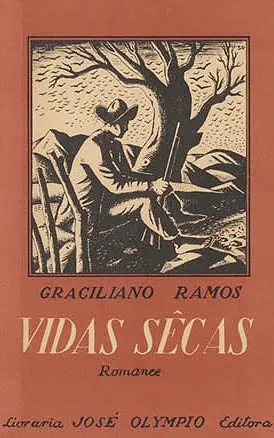
Vidas secas (1st edition spelling: Vidas sêcas, literally "Dry Lives"; translated into English as Barren Lives) is a novel by twentieth-century Brazilian writer Graciliano Ramos, written in 1938. It tells the cyclical story of a family of five persons: Fabiano, the father; Sinhá Vitória, the mother; two sons (just called boys) and their dog called Baleia (whale in Portuguese) in the poverty stricken and arid Brazilian northeast. One of the distinguishing characteristics of the book is that it is written in said cyclical manner, making it possible to read the first chapter as a continuation of the last chapter, reflecting the cycle of poverty and desolation in the Sertão. Another distinguishing characteristic is that the dog Baleia is considered the most sensible and human character. It is often considered amongst the most important works in Brazilian literature, blurring the genres of Modernism, Regionalism, and Realism with a "dry", concise style of writing. Due to its exploration of complex social and existential problems within Brazilian society, Vidas Secas has been lauded by critics as significantly contributing to the evolution of Brazilian literature.
Licencia del texto: CC BY-SA 4.0 · Fuente
Detalles
- Tipo
- Libro
- Estreno
- 1 de enero de 1938
- Géneros
- Regionalism
- Creado por
- Graciliano Ramos
- Países
- Brazil
Portada: Wikimedia Commons · Capa de Sonia Rosa. Livraria José Olympio Editora. · Public domain · Fuente
.jpg)