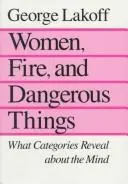
Women, Fire, and Dangerous Things
Nota de la comunidad
15 valoraciones
1987 · George Lakoff
Promedios por categoría
Tu valoración
Inicia sesión para valorarEn otros sitios
Las notas de otros sitios les pertenecen; cada enlace abre la fuente.
Sinopsis
Aún no disponible en español — se muestra la versión en inglés.
Women, Fire, and Dangerous Things: What Categories Reveal about the Mind is a 1987 non-fiction book by George Lakoff, an American cognitive linguist. Published by the University of Chicago Press, the book puts forward a model of cognition argued on the basis of semantics. The book emphasizes the centrality of metaphor, defined as the mapping of cognitive structures from one domain onto another, in the cognitive process. Women, Fire, and Dangerous Things explores the effects of cognitive metaphors, both culturally specific and human-universal, on the grammar per se of several languages, and the evidence of the limitations of the classical logical-positivist or Anglo-American School philosophical concept of the category usually used to explain or describe the scientific method. The book's title was inspired by the noun class system of the Dyirbal language, in which the "feminine" category includes nouns for women, water, fire, violence, and certain animals. The book builds on earlier work in prototype theory by psychologist Eleanor Rosch in the 1970s, which showed that people tend to recognize certain members of a category as more "typical" than others (e.g., a robin is a more prototypical bird than a penguin). Lakoff applies these insights to linguistic semantics, arguing that categories are often structured around central prototypes with radial extensions.
Licencia del texto: CC BY-SA 4.0 · Fuente
Detalles
- Tipo
- Libro
- Estreno
- 1 de enero de 1987
- Géneros
- non-fiction
- Creado por
- George Lakoff
- Páginas
- 614