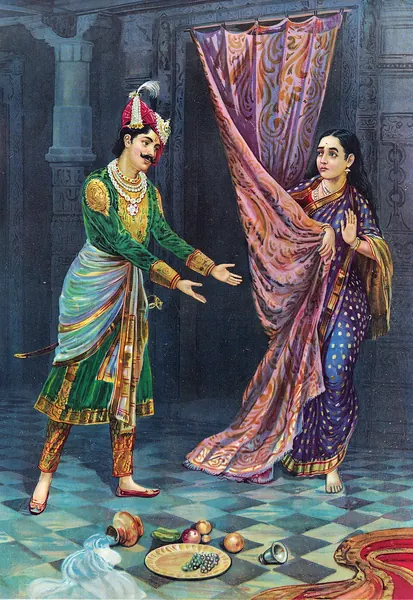
Keechaka Vadham
Nota da comunidade
5 avaliações
1918 · R. Nataraja Mudaliar
Médias por categoria
Sua avaliação
Entre para avaliarEm outros sites
Notas de outros sites pertencem a eles; cada link abre a fonte.
Sinopse
Ainda não disponível em português — exibindo a versão em inglês.
Keechaka Vadham (transl. The Extermination of Keechaka) is an Indian silent film produced, directed, filmed and edited by R. Nataraja Mudaliar. The first film to have been made in South India, it was shot in five weeks at Nataraja Mudaliar's production house, India Film Company. As the members of the cast were Tamils, Keechaka Vadham is considered to be the first Tamil film. No print of it is known to have survived, making it a lost film. The screenplay, written by C. Rangavadivelu, is based on an episode from the Virata Parva segment of the Hindu epic Mahabharata, focusing on Keechaka's attempts to woo Draupadi. The film stars Raju Mudaliar and Jeevarathnam as the central characters. Released in the late 1910s, Keechaka Vadham was commercially successful and received positive critical feedback. The film's success prompted Nataraja Mudaliar to make a series of similar films based on Hindu mythology, which laid the foundation for the South Indian cinema industry and led to him being recognised as "the father of Tamil cinema." Nataraja Mudaliar's works were an inspiration to other filmmakers including Raghupathi Surya Prakasa and J. C. Daniel.
Licença do texto: CC BY-SA 4.0 · Fonte
Detalhes
- Tipo
- Filme
- Lançamento
- 1 de janeiro de 1918
- Gêneros
- historical film, silent film
- Criado por
- R. Nataraja Mudaliar
- Países
- India
Capa: Wikimedia Commons · Raja Ravi Varma · Public domain · Fonte
