Doina
Nota da comunidade
7 avaliações
1883 · Mihai Eminescu
Médias por categoria
Sua avaliação
Entre para avaliarSinopse
Ainda não disponível em português — exibindo a versão em inglês.
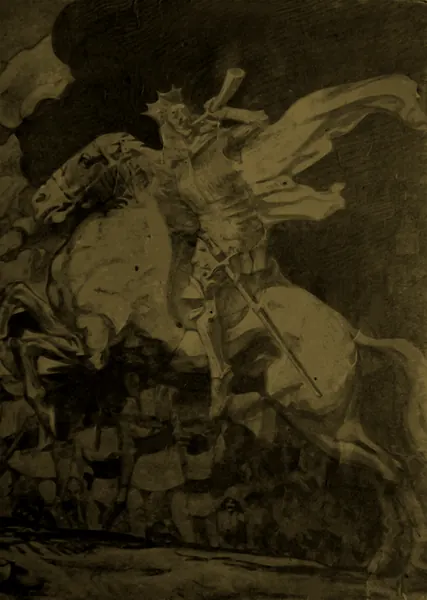
Doina, or Doină (sometimes translated as "Lament"), is a political poem by the Romanian Mihai Eminescu. It was first published in 1883 and is therefore seen by some as Eminescu's final work in verse, although it may actually be an 1870s piece, inspired or enhanced by the perceived injustice of the Berlin Treaty. A variation of the doina (plural: doine), picked up from Romanian folklore, it is noticeably angry to the point of rhetorical violence, a radical expression of Romanian nationalism against invading "foreigners", with additional hints of ecopoetry and "anti-technicist" discourse. Doina delineates the ideal geographical space of Greater Romania, at a time when Romanian-inhabited regions were divided between an independent kingdom and multinational empires. Its final lines call on Stephen the Great, depicted as a sleeping hero, to take up the cause of Romanians and chase foreigners out with the sound of his horn. The same basic themes appear in another poem by Eminescu, the anthem-like La arme ("To Arms"), which is sometimes discussed as a variant of Doina. Expressly anti-Russian, also read as antisemitic, anti-German, anti-Greek, anti-Hungarian, and anti-Ukrainian, Doina has been described as "chauvinistic" and "minor" by some critics, "beautiful" by others. It has been present in the Romanian curriculum since the 1890s, while also serving as subversive literature among Romanian communities in the Russian Empire. During the interwar, with Greater Romania established as a political reality, Doina became a rallying call for revolutionary nationalists and fascists. It was deemed problematic and censored during the communist period, although tacitly endorsed under the regime's latter, national-communist, phase. It was recited in more or less formal contexts by Ludovic Antal, Victor Eftimiu, and Adrian Păunescu, and subject to several admiring nods from President Nicolae Ceaușescu. The poem returned in focus during the Romanian Revolution of 1989 and after, when it also became a public symbol of Romanian identity in Moldova.
Licença do texto: CC BY-SA 4.0 · Fonte
Detalhes
- Tipo
- Livro
- Lançamento
- 1 de julho de 1883
- Criado por
- Mihai Eminescu
- Países
- Kingdom of Romania
Capa: Wikimedia Commons · Ipolit Strâmbu · Public domain · Fonte
_1914.png)