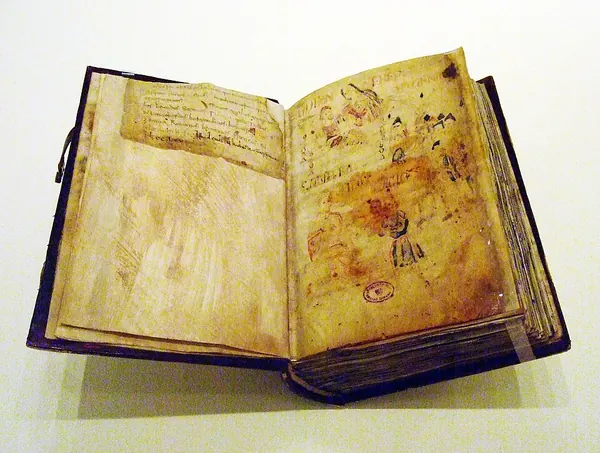
Frankish Table of Nations
Nota da comunidade
8 avaliações
Anonymous (Table of nations)
Médias por categoria
Sua avaliação
Entre para avaliarSinopse
Ainda não disponível em português — exibindo a versão em inglês.
The Frankish Table of Nations is a brief early medieval genealogical text in Latin giving the supposed relationship between thirteen nations descended from three brothers. The nations are the Ostrogoths, Visigoths, Vandals, Gepids, Saxons, Burgundians, Thuringians, Lombards, Bavarians, Romans, Bretons, Franks and Alamanni. The Table is called "Frankish" after the origin of the surviving manuscript tradition, not the origin of the work itself. In structure it is similar to the "Table of Nations" in the Bible. Although it survives in over ten manuscripts, the only medieval work to make use of it was the 9th-century Historia Brittonum, which nonetheless assured it a wide diffusion. The Table itself is the oldest extant work to make use of the Germania, a 1st-century work of Tacitus. It is also the oldest work to mention the Bavarians. The Table was probably composed in the Byzantine Empire, or possibly in the Ostrogothic Kingdom, around 520. It may have originally been written in Greek. Its author fit contemporary peoples, mostly Germanic, into a framework supplied by Tacitus. Later copyists frequently combined the text with lists of Roman and Frankish kings, which some modern editors have treated as integral parts of the text.
Licença do texto: CC BY-SA 4.0 · Fonte
Detalhes
- Tipo
- Livro
- Criado por
- Anonymous (Table of nations)
Capa: Wikimedia Commons · James Steakley · CC BY-SA 3.0 · Fonte
