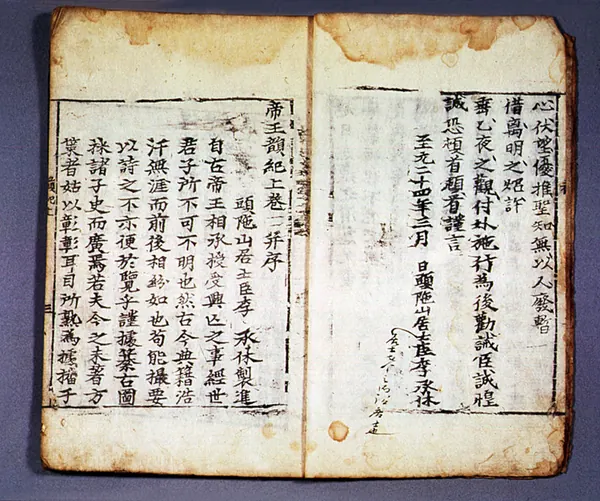
Jewang Ungi
Nota da comunidade
18 avaliações
Médias por categoria
Sua avaliação
Entre para avaliarSinopse
Ainda não disponível em português — exibindo a versão em inglês.
The Chewang un'gi (Songs of Emperors and Kings) is a historical poem composed by Yi Sŭnghyu (이승휴; 李承休) in 1287, in the late Goryeo period. Comprising two volumes, it depicts the history of Korea from Dangun to King Chungnyeol, and is the second-oldest text recounting the legend of Dangun. The title is sometimes alternatively translated Rhymed Chronicles of Emperors and Kings. Yi composed the text after retiring from government service to the Cheoneunsa monastery on Duta-san mountain in Samcheok, in present-day Gangwon province. The Chewang un'gi is considered important as it is the first history book to record the history of Balhae as Korean history, and has been cited by both North and South Korean scholars. According to Myungkyung University Professor Lee Sooyoung, Yi was motivated to write the Jewangungi due to both the internal political turmoil of the Goryeo court as well as the Yuan dynasty's interference in Goryeo politics during Goryeo under Mongol rule. The first edition of the work was printed in 1295–1296 in Jinju, while Yi was still alive. Both extant texts, however, are from a revised woodcut edition printed in 1360 in Gyeongju. On April 1, 1965, the version kept in Uiwang was designated South Korean National Treasure No. 418. Another version, held at the Samseong Museum of Publishing in Seoul, was designated National Treasure No. 1091 in 1991.
Licença do texto: CC BY-SA 4.0 · Fonte
Detalhes
- Tipo
- Livro
- Gêneros
- narrative poetry, historiography
Capa: Wikimedia Commons · 문화재청 (공공누리 제1유형) · CC BY-SA 4.0 · Fonte
.jpg)