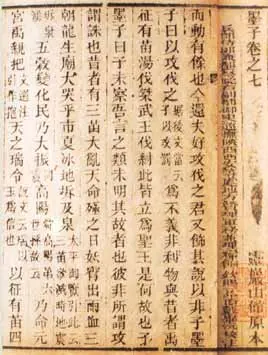
Mozi
Nota da comunidade
20 avaliações
Mozi
Médias por categoria
Sua avaliação
Entre para avaliarSinopse
Ainda não disponível em português — exibindo a versão em inglês.
The Mozi (Chinese: 墨子), also called the Mojing (Chinese: 墨經) or the Mohist canon, is an ancient Chinese text from the Warring States period (476–221 BC) that expounds the philosophy of Mohism. It propounds such Mohist ideals as impartiality, meritocratic governance, economic growth and aversion to ostentation, and is known for its plain and simple language. The book's chapters can be divided into several categories: a core of 31 chapters, containing the basics of Mohist philosophy; several traditionally known as the "Dialectical Chapters", among the most important in early Chinese texts on logic; five sections containing stories and information about Mozi, his disciples, and his followers; and eleven chapters on technology and defensive warfare, on which the Mohists were expert and which are valuable sources of information on ancient Chinese military technology. There two other minor sections: an initial group of seven chapters that are clearly of a much later date, and two anti-Confucian chapters, of which one has survived. The Mohist philosophical school went into decline in the 3rd century BC, and copies of the Mozi were not well-preserved. The modern text has been described as "notoriously corrupt". Of the Mozi's 71 original chapters, 18 have been lost, and several others are badly fragmented.
Licença do texto: CC BY-SA 4.0 · Fonte
Detalhes
- Tipo
- Livro
- Criado por
- Mozi
- Países
- Eastern Zhou
Capa: Wikimedia Commons · Iflwlou · Public domain · Fonte
