Médias por categoria
Sua avaliação
Entre para avaliarSinopse
Ainda não disponível em português — exibindo a versão em inglês.
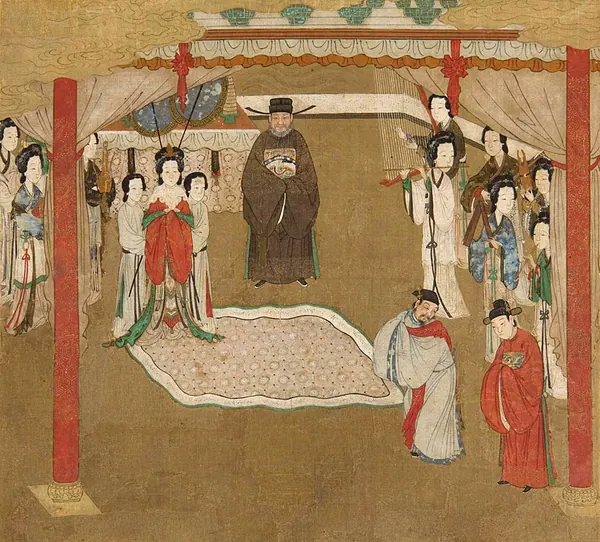
Tale of the Pipa (traditional Chinese: 琵琶記; simplified Chinese: 琵琶记; pinyin: Pípa jì; Wade–Giles: P'i-p'a chi "Tale of the Pipa" or "The Story of the Lute") is a Chinese nanxi play written by the playwright Gao Ming during the late Yuan dynasty. There are French, German, English translations of the play, and an English novelization-translation. It was the most popular drama during the Ming dynasty, and it became a model for Ming drama as it was the favorite opera of the first Ming emperor Zhu Yuanzhang. The play is set during the Han dynasty. Based on an older play, Zhao Zhen nü and Cai Erlang (趙貞女蔡二郎), also known as Zhao zhen nü (趙貞女, The Chaste Maiden Zhao), it tells the story of a loyal wife named Zhao Wuniang (趙五孃; 赵五娘; Zhào Wǔniáng; Chao4 Wu3-niang2) who, left destitute when her husband Cai Yong is forced to marry another woman, undertakes a 12-year search for him. During her journey, she plays the pipa of the play's title in order to make a living. The original story sees Zhao killed by a horse and Cai struck by lightning, however in Gao Ming's version the two are eventually reconciled and live out their lives happily. Gao reportedly composed The Lute over a three-year period of solitary confinement, locking himself in an attic room and wearing down the floorboards by tapping out the rhythms of his songs.
Licença do texto: CC BY-SA 4.0 · Fonte
Detalhes
- Tipo
- Livro
- Gêneros
- chuanqi, nanxi
- Criado por
- Gao Ming
- Países
- People's Republic of China
Capa: Wikimedia Commons · Unknown authorUnknown author · Public domain · Fonte
