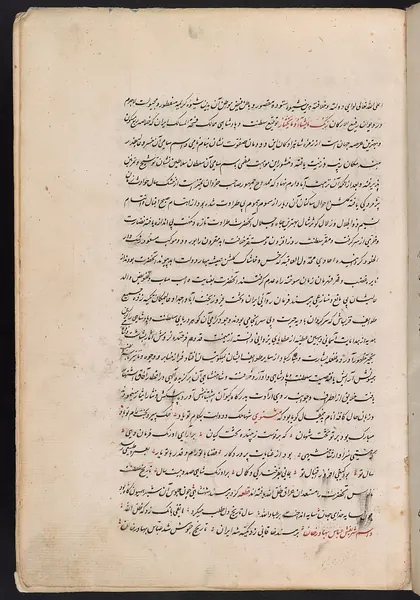
Tarikh-e Alam-ara-ye Abbasi
Nota da comunidade
20 avaliações
Iskandar Beg Munshi
Médias por categoria
Sua avaliação
Entre para avaliarSinopse
Ainda não disponível em português — exibindo a versão em inglês.
The Tarikh-e Alam-ara-ye Abbasi (Persian: تاریخ عالمآرای عباسی, romanized: World Adorning History of Abbas) is a Persian-language chronicle covering the history of the early Safavid dynasty of Iran, particularly Shah Abbas I (r. 1587–1629). Its author was his court historian and scribe Iskandar Beg Munshi, who completed it in 1629. The book is considered the most significant piece of Iranian historiography written about the Safavids. It has greatly influenced Safavid studies and serves as the foundation for a number of widely held beliefs regarding Safavid history. This book has been translated into English by Roger Savory. The most complete biography of Abbas the Great was written by the head secretary at his court (Iskandar Beg Munshi) in a Persian history book called the Tarikh-e Alam-ara-ye Abbasi (“The Adorner of the World”). This book uses relatively complex language and discusses not only about Shah Abbas’s life and rule, but about earlier Safavid shahs, what was happening in the Ottoman Empire and West Asia, as well as the state of art, science, and learning at the time. It includes short life stories of many poets, artists, writers, and scholars. This book is an important source for learning about Safavid history, and it is seen as "the last great work" in the tradition of old Persian history writing. Translating Tarikh-e Alam-ara-ye Abbasi was quite challenging. Not only is the book extremely long (over 1116 pages of dense text in its latest edition), but its writing style is so complex that a word-for-word translation would be very difficult and boring to read.
Licença do texto: CC BY-SA 4.0 · Fonte
Detalhes
- Tipo
- Livro
- Criado por
- Iskandar Beg Munshi
Capa: Wikimedia Commons · loc.gov · CC0 · Fonte
