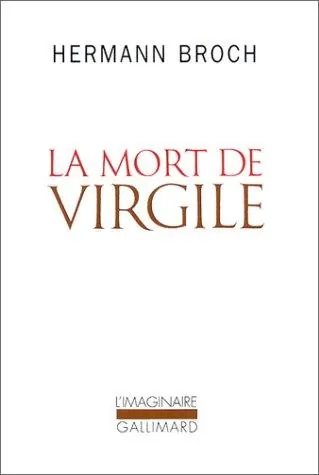
The Death of Virgil
Nota da comunidade
15 avaliações
1945 · Hermann Broch
Médias por categoria
Sua avaliação
Entre para avaliarEm outros sites
Notas de outros sites pertencem a eles; cada link abre a fonte.
Sinopse
Ainda não disponível em português — exibindo a versão em inglês.
The Death of Virgil (German: Der Tod des Vergil) is a 1945 novel by the Austrian author Hermann Broch. The narrative imagines the last hours of life of the Roman poet Virgil, in the port of Brundisium (Brindisi), whence he had accompanied the emperor Augustus, his decision – frustrated by the emperor – to burn his Aeneid, and his final reconciliation with his destiny. Virgil's heightened perceptions as he dies recall his life and the age in which he lives. The novel examines the relationship between poetry and life, especially poetry and politics, taking a critical view of the value of literature in times of upheaval. Heavily influenced by the structure and interior monologue of James Joyce's Ulysses, the novel also can be read as criticizing the narcissism of artists' self-reflection. Broch began the novel during the rise of the Nazi Party, writing part of it while imprisoned after the Anschluss. After his emigration to the US, it was published in German and English simultaneously in 1945. Despite a reputation as a challenging book, the novel has been included in several lists of the best novels of all time and inspired a cycle of orchestral works by Jean Barraqué.
Licença do texto: CC BY-SA 4.0 · Fonte
Detalhes
- Tipo
- Livro
- Lançamento
- 1 de janeiro de 1945
- Gêneros
- biographical novel, historical fiction
- Criado por
- Hermann Broch
- Países
- Austria