Médias por categoria
Sua avaliação
Entre para avaliarEm outros sites
Notas de outros sites pertencem a eles; cada link abre a fonte.
Sinopse
Ainda não disponível em português — exibindo a versão em inglês.
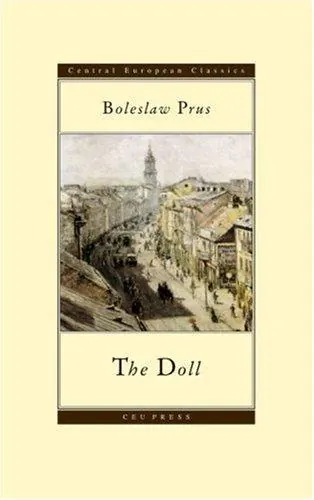
The Doll (Polish: Lalka) is a realist novel by the Polish writer Bolesław Prus, first published in periodical form between 1887 and 1889, and released as a book in 1890. The story centers on Stanisław Wokulski, a successful merchant whose unrequited love for the aristocratic Izabela Łęcka exposes the social inequalities, class divisions, and contradictions of 19th-century Warsaw. The novel's title has a dual referent as it derives from a minor episode involving a stolen toy, while also serving as a metaphorical reference to the novel's principal female character. A major theme of The Doll is the conflict between different social classes and the limitations imposed by social stratification. The novel portrays an aristocracy that retains considerable social prestige despite its declining economic position, alongside a growing middle class bourgeoisie whose wealth does not provide social acceptance. Prus examines poverty, inequality, prejudice, antisemitism, the position of women, and the difficulties in attempting to ameliorate social circumstances. The novel's combination of personal tragedy and social observation allowed Prus to examine the tensions between romantic ideals and the practical values of society. Most of the story is presented by a third-person narrator who follows the characters, while substantial sections consist of the diary of Ignacy Rzecki, Wokulski's older associate and trusted shopkeeper. The novel has been regarded by some, including Nobel laureate Czesław Miłosz, as the greatest Polish novel. According to Prus biographer Zygmunt Szweykowski, it may be unique in 19th-century world literature as a comprehensive, compelling picture of an entire society. However, Aleksander Świętochowski and other Positivist writers were quite critical of the work, claiming that it is ambiguous and psychologically complex. It has been translated into twenty-eight languages, and has been produced in several film versions and, most famously, as a television miniseries in 1977.
Licença do texto: CC BY-SA 4.0 · Fonte
Detalhes
- Tipo
- Livro
- Lançamento
- 1 de janeiro de 1887
- Gêneros
- social fiction
- Criado por
- Bolesław Prus
- Países
- Poland