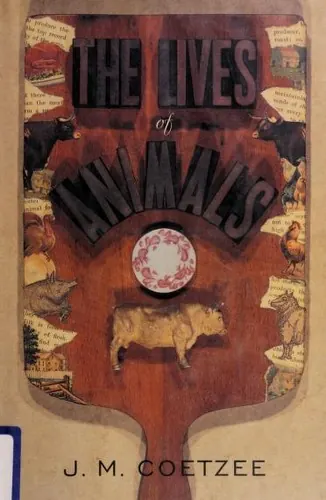
The Lives of Animals
Nota da comunidade
5 avaliações
1999 · J. M. Coetzee, Marjorie Garber, Peter Singer, Wendy Doniger, Barbara Smuts, Amy Gutmann
Médias por categoria
Sua avaliação
Entre para avaliarEm outros sites
Notas de outros sites pertencem a eles; cada link abre a fonte.
Sinopse
Ainda não disponível em português — exibindo a versão em inglês.
The Lives of Animals (1999) is a metafictional novella about animal rights by the South African novelist J. M. Coetzee, recipient of the 2003 Nobel Prize in Literature. The work is introduced by Amy Gutmann and followed by a collection of responses by Marjorie Garber, Peter Singer, Wendy Doniger and Barbara Smuts. It was published by Princeton University Press as part of its Human Values series. The Lives of Animals consists of two chapters, "The Philosophers and the Animals" and "The Poets and the Animals," first delivered by Coetzee as guest lectures at Princeton on 15 and 16 October 1997, part of the Tanner Lectures on Human Values. The Princeton lectures consisted of two short stories (the chapters of the book) featuring a recurring character, the Australian novelist Elizabeth Costello, Coetzee's alter ego. Costello is invited to give a guest lecture to the fictional Appleton College in Massachusetts, just as Coetzee is invited to Princeton, and chooses to discuss not literature, but animal rights, just as Coetzee does. In having Costello deliver the arguments within his lectures, Coetzee plays with form and content, and leaves ambiguous to what extent the views are his own. The Lives of Animals appears again in Coetzee's novel Elizabeth Costello (2003). Coetzee's novella discusses the foundations of morality, the need of human beings to imitate one another, to want what others want, leading to violence and a parallel need to scapegoat non-humans. He appeals to an ethic of sympathy, not rationality, in our treatment of animals, to literature and the poets, not philosophy. Costello tells her audience, "Sympathy has everything to do with the subject and little to do with the object. ... There are people who have the capacity to imagine themselves as someone else, there are people who have no such capacity. ... and there are people who have the capacity but choose not to exercise it. ... There are no bounds to the sympathetic imagination."
Licença do texto: CC BY-SA 4.0 · Fonte
Detalhes
- Tipo
- Livro
- Lançamento
- 1 de janeiro de 1999
- Gêneros
- fiction
- Criado por
- J. M. Coetzee, Marjorie Garber, Peter Singer, Wendy Doniger, Barbara Smuts, Amy Gutmann