Médias por categoria
Sua avaliação
Entre para avaliarEm outros sites
Notas de outros sites pertencem a eles; cada link abre a fonte.
Sinopse
Ainda não disponível em português — exibindo a versão em inglês.
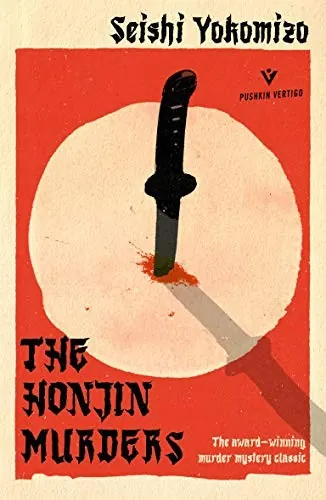
The Honjin Murders (本陣殺人事件, Honjin satsujin jiken) is a mystery novel by Seishi Yokomizo. It was serialized in the magazine Houseki from April to December 1946, and won the first Mystery Writers of Japan Award in 1948. It was filmed as Death at an Old Mansion in 1975. In 2019, it was translated into English for the first time by Louise Heal Kawai, and the translation was named by The Guardian as one of the best recent crime novels in 2019. The novel introduces Kosuke Kindaichi, a popular fictional detective who featured in seventy-seven Yokomizo mysteries. In it, he solves a locked-room mystery murder that takes place in an isolated mansion (honjin) blanketed in snow. Yokomizo had read classic Western detective novels extensively, and the novel makes allusions to John Dickson Carr, Gaston Leroux, and others, with several mentions of Leroux's The Mystery of the Yellow Room as an emblematic locked-room mystery. Though writing a noir and sometimes graphic murder mystery, Yokomizo worked within the tradition of literary Japanese aesthetics. He frequently paused to include lyrical descriptions of nature, the mansion, and the characters. The novel provides a detailed sense of place, including repeated references to cardinal directions and a detailed sketch of the murder scene. Koto music, instruments, and implements play a recurring role in the case. In addition to the central mystery, Yokomizo uses the story to illuminate the traditions, customs, and agrarian rhythm of rural Japan in the early twentieth century as well as anxieties about changing class distinctions. The omniscient narrator, in an aside to the "Gentle reader," explains that the word "lineage, which has all but fallen out of usage in the city, is even today alive and well in rural villages like this one," and the killer's motive is revealed to relate to an obsession with traditional concepts of honor and family bloodlines.
Licença do texto: CC BY-SA 4.0 · Fonte
Detalhes
- Tipo
- Livro
- Lançamento
- 20 de abril de 1973
- Gêneros
- xiaoshuo
- Criado por
- Seishi Yokomizo
- Países
- Japan