Médias por categoria
Sua avaliação
Entre para avaliarEm outros sites
Notas de outros sites pertencem a eles; cada link abre a fonte.
Sinopse
Ainda não disponível em português — exibindo a versão em inglês.
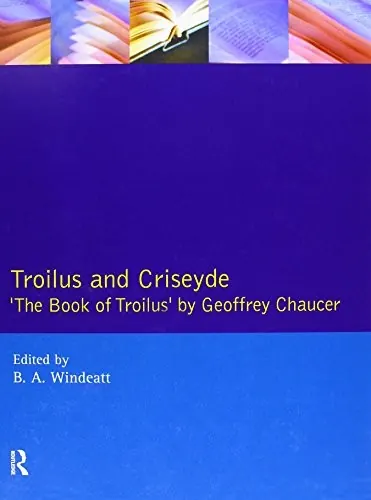
Troilus and Criseyde () is an epic poem by Geoffrey Chaucer which re-tells in Middle English the tragic story of the lovers Troilus and Criseyde set against a backdrop of war during the siege of Troy. It was written in rime royale and probably completed during the mid-1380s. Many Chaucer scholars regard it as the poet's finest work. As a finished long poem, it is more self-contained than the better known but ultimately unfinished The Canterbury Tales. This poem is often considered the source of the phrase: "all good things must come to an end" (3.615). Although Troilus is a character from Ancient Greek literature, the expanded story of him as a lover was of Medieval origin. The first known version is from Benoît de Sainte-Maure's poem Roman de Troie, but Chaucer's principal source appears to have been Boccaccio, who re-wrote the tale in his Il Filostrato. Chaucer attributes the story to a "Lollius" (whom he also mentions in The House of Fame), although no writer with this name is known. Chaucer's version can be said to reflect a less cynical and less misogynistic world-view than Boccaccio's, casting Criseyde as fearful and sincere rather than simply fickle and having been led astray by the eloquent and perfidious Pandarus. It also inflects the sorrow of the story with humour. The poem had an important legacy for later writers. Robert Henryson's Scots poem The Testament of Cresseid imagined a rambunctious fate for Criseyde not given by Chaucer. In historical editions of the English Troilus and Criseyde, Henryson's distinct and separate work was sometimes included without accreditation as an "epilogue" to Chaucer's tale. Other texts, for example, John Metham's Amoryus and Cleopes (c. 1449), adapt language and authorship strategies from the famous predecessor poem. Shakespeare's tragedy Troilus and Cressida, although much darker in tone, was also based in part on the material. Troilus and Criseyde is usually considered to be a courtly romance, although the generic classification is an area of significant debate in most Middle English literature. It is part of the Matter of Rome cycle, a fact which Chaucer emphasizes.
Licença do texto: CC BY-SA 4.0 · Fonte
Detalhes
- Tipo
- Livro
- Gêneros
- epic poem
- Criado por
- Geoffrey Chaucer