The Symbol of the Unconquered
Nota da comunidade
4 avaliações
1920 · Oscar Micheaux
Avaliações insuficientes — A nota aparece a partir de 5 avaliações.
Médias por categoria
Sua avaliação
Entre para avaliarEm outros sites
Notas de outros sites pertencem a eles; cada link abre a fonte.
Sinopse
Ainda não disponível em português — exibindo a versão em inglês.
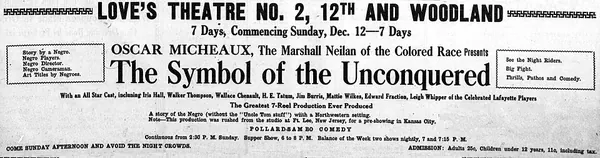
The Symbol of the Unconquered (also known as The Wilderness Trail) is a 1920 silent "race film" drama produced, written and directed by Oscar Micheaux. Premiering only a few years after The Birth of a Nation, the film was advertised for its negative depiction of the Ku Klux Klan. It is Micheaux's fourth feature-length film and, along with Within Our Gates, is among his early surviving works. The film is based on the way perceptions of race shape human relationships. It contrasts the behavior of two white-passing characters towards other members of their race. Heroine Eve Mason (Iris Hall) moves to a frontier town and befriends her black neighbors, while the villainous Jefferson Driscoll scorns the company of all other black people, even rejecting his own mother. A romance grows between Eve and young black prospector Hugh Van Allen, but he believes Eve is white and hides his feelings from her. When Driscoll and friends enlist the KKK to run Van Allen off his oil-rich land, Eve saves the day by riding into town for help. Two years later, Van Allen is a successful oil king; Eve delivers a letter revealing her black ancestry, and the two are able to declare their love for each other at last. The Symbol of the Unconquered was made at Fort Lee, New Jersey, and released by Micheaux on November 29, 1920. A print of the film is extant at the Museum of Modern Art in New York.
Licença do texto: CC BY-SA 4.0 · Fonte
Detalhes
- Tipo
- Filme
- Lançamento
- 29 de novembro de 1920
- Gêneros
- silent film, drama film, race film
- Criado por
- Oscar Micheaux
- Duração
- 54 min
- Países
- United States
Capa: Wikimedia Commons · Oscar Micheaux · Public domain · Fonte
