Category averages
Your rating
Log in to rateSynopsis
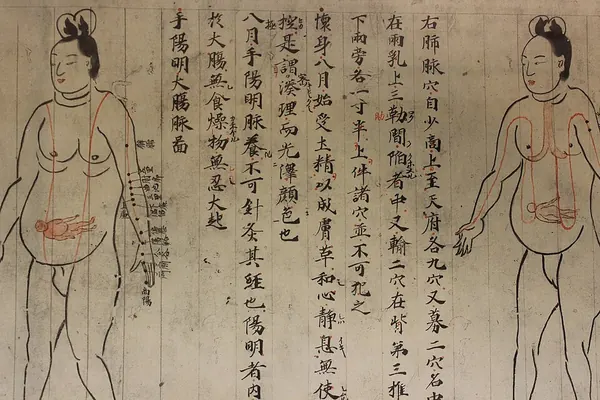
Ishinpō (醫心方, Ishinpō or Ishinhō) is the oldest surviving Japanese medical text. It was completed in 984 by Tamba Yasuyori (also referred in some sources as Tanba no Yasuyori) and is 30 volumes in length. The work is partly based on a Chinese medical work called Zhubing yuanhou lun (諸病源候論 General Treatise on Causes and Manifestations of All Diseases), compiled by Sui dynasty writer Chao Yuanfang. Many of the texts cited in Ishinpō have been lost in China, and have only survived to the present through their inclusion in the work. It is a national treasure of Japan. The structural organization of the text is as follows: The Ishinpō preserved more than 200 important medical documents that were all Chinese in origin and no Japanese sources. The medical knowledge in the tome covered clinical treatments that drew from the ancient Traditional Chinese medicine that included Taoist references to pharmacology. For instance, there was the inclusion of a Chinese Buddhist Sutra from the Dàzàngjīng ( Chinese Buddhist Canon) on Pregnancy, which outlined the physical developments and fetal movements. Scholars cite its similarity with a prescription from the old Chinese medical text called Taichan shu, which contained doctrines about the development of embryo and fetus as well as proper hygiene for pregnant women. The Ishinpō is also notable for preserving some of the Taoist sexual manuals from the Han to the Tang dynasty. The twenty-eighth section of the Ishinpō contains a complete transcription of a Daoist text known as Sunü Jing (The Classic of Sunu) which is a dialogue between the Dark Maiden and the Yellow Emperor, with the former providing advice on sexual practices to the latter. While the text is written in kanbun, Japanese terms are written to the side in Man'yōgana for plants, animals, and minerals. A facsimile reproduction of the 1859 edition, 30 volumes in 2 hardback cases, plus a 270-page modern commentary, was issued in Tokyo in 1973.
Text license: CC BY-SA 4.0 · Source
Details
- Type
- Book
- Release date
- January 1, 984
- Genres
- medical non-fiction literature
- Created by
- Tanba no Yasuyori
- Countries
- Japan
Cover: Wikimedia Commons · Hanabishi · CC BY-SA 3.0 · Source
