Category averages
Your rating
Log in to rateSynopsis
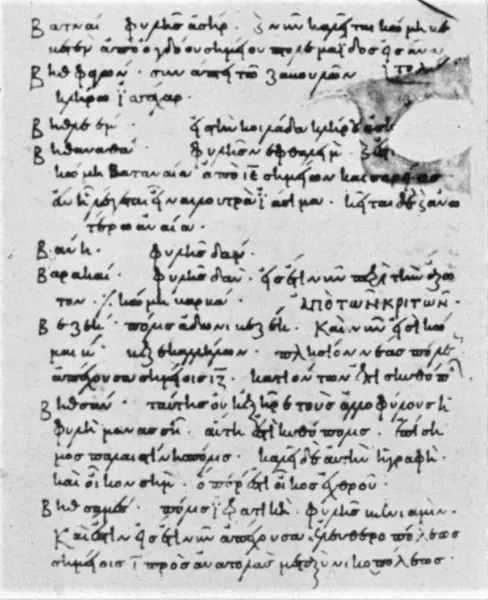
The Onomasticon (Ancient Greek: Ὀνομαστικόν, Onomastikón), more fully On the Place Names in the Holy Scripture (Περὶ τῶν Τοπικῶν Ὀνομάτων τῶν ἐν τῇ Θείᾳ Γραφῇ, Peri tōn Topikōn Onomatōn tōn en tē Theia Graphē), is a gazetteer of historical and then-current place names in Palestine and Transjordan compiled by Eusebius (c. AD 260/265–339), bishop of Caesarea, and traditionally dated to sometime before 324. The Onomasticon sits uneasily between the ancient genres of geography and lexicography, taking elements from both but serving as a member of neither. It is widely considered the most important book for the study of Palestine in the Roman period. Its influence can be detected both in the Madaba map and the accounts of early Christian pilgrims, and it most probably contributed to the Christian pilgrimage of the 4th century, constructing "The Holy Land" as a unifying idea for Christians. Even so, it appears that the Onomasticon was not meant to be a guide for pilgrims, as it did not mention places to be venerated, rather, its target audience was biblical scholars and the composition was meant as an exegetical tool for understanding scripture.
Text license: CC BY-SA 4.0 · Source
Details
- Type
- Book
- Release date
- January 1, 320
- Genres
- onomasticon
- Created by
- Eusebius of Caesarea
Cover: Wikimedia Commons · Unknown copyist, 11th/12th century · Public domain · Source
