Category averages
Time to beat
- Main story
- 46 h3 reports
- Main + extras
- Not enough reports yet (needs 3)1 report
- Completionist
- Not enough reports yet (needs 3)no reports
Median of the hours reported by players who completed the game.
Your rating
Log in to rateElsewhere
Scores from other sites belong to them; each link opens the source.
Synopsis
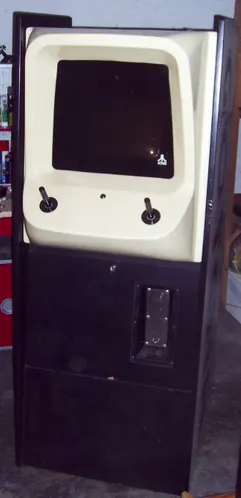
Gotcha is an arcade video game developed by Atari and released in October 1973. It was the fourth game by the company, after the 1972 Pong, which marked the beginning of the commercial video game industry along with the Magnavox Odyssey, and the 1973 Space Race and Pong Doubles. In the game, two players move through a maze, which continually changes over time. One player, the Pursuer, attempts to catch the other, the Pursued; if they do, a point is scored, and the players reset positions. The game emits an electronic beeping sound, which increases in pace as the Pursuer gets closer to the Pursued, and each game lasts a set amount of time. Gotcha was designed by Allan Alcorn, the designer of Pong, and a prototype was constructed by Cyan Engineering, Atari's semi-independent research and development subsidiary. Development began in July 1973 as part of Atari's strategy to develop multiple types of games to separate themselves from their competitors, who they saw as focused primarily on creating Pong clones. The cabinet was designed by George Faraco, initially with the joysticks encased in pink domes meant to represent breasts. Although this design inspired the advertising flyer on which it appears behind a man chasing a woman in a nightdress, it was changed to use regular joysticks soon after release. The game was not commercially successful; later sources have termed it as "arousing little more than controversy", though one source claims it sold 3,000 units. In addition to the main black-and-white game, limited runs were produced of a tinted color version and a true multi-color version of the game; the latter is believed to be the first color arcade game.
Text license: CC BY-SA 4.0 · Source
Details
- Type
- Game
- Release date
- January 1, 1973
- Genres
- maze video game
- Platforms
- arcade video game
- Created by
- Atari
- Countries
- United States
Cover: Wikimedia Commons · MikeAtari · CC BY-SA 3.0 · Source
